ROMANCE
Sasha Miasnikova and Zora Moniz
vinaigrette
Two-site exhibition with Iowa, Brooklyn
Part I: Jan 17–March 1, 2026 (Brooklyn)
Part II: Jan 24–March 8, 2026 (Pittsburgh)
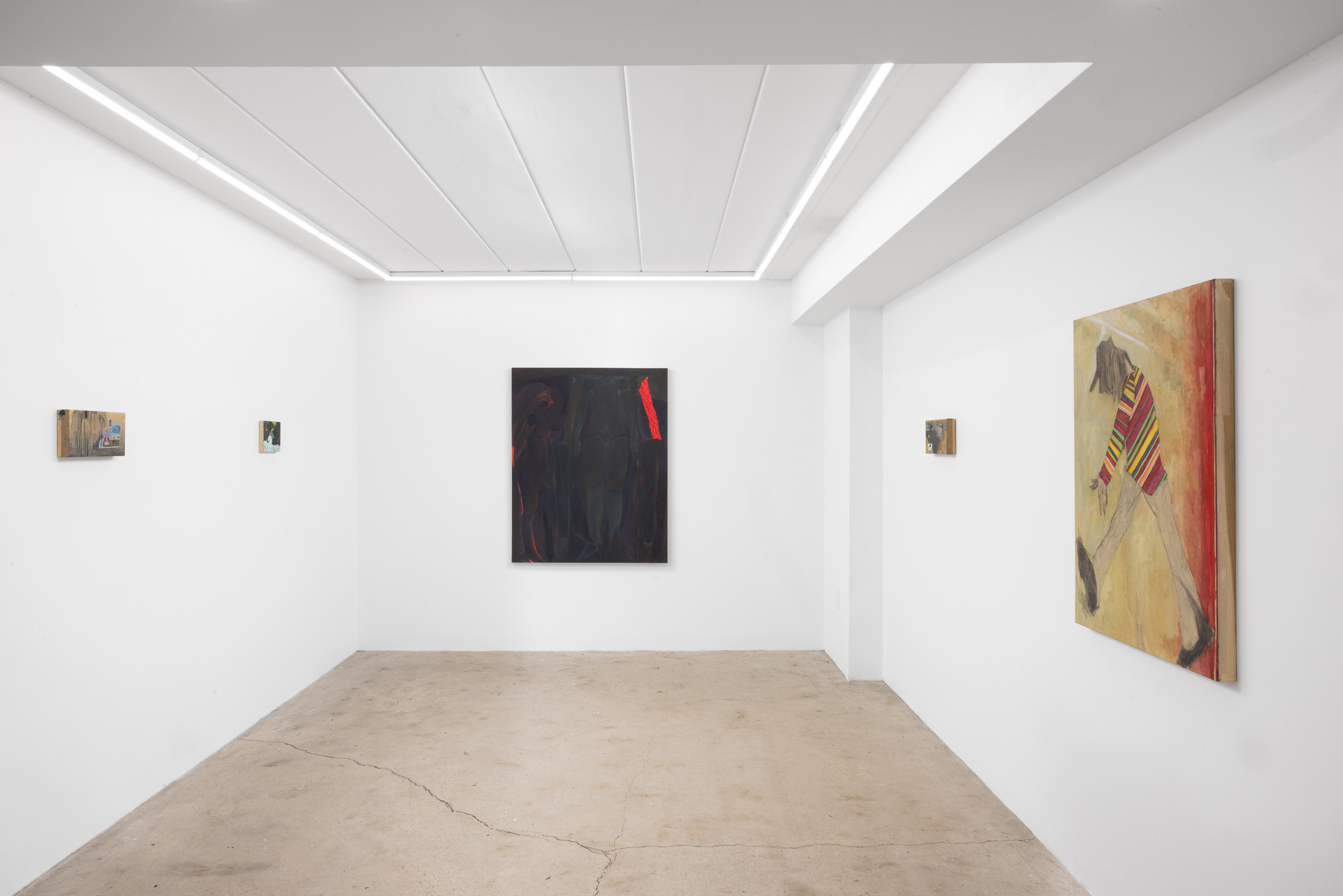
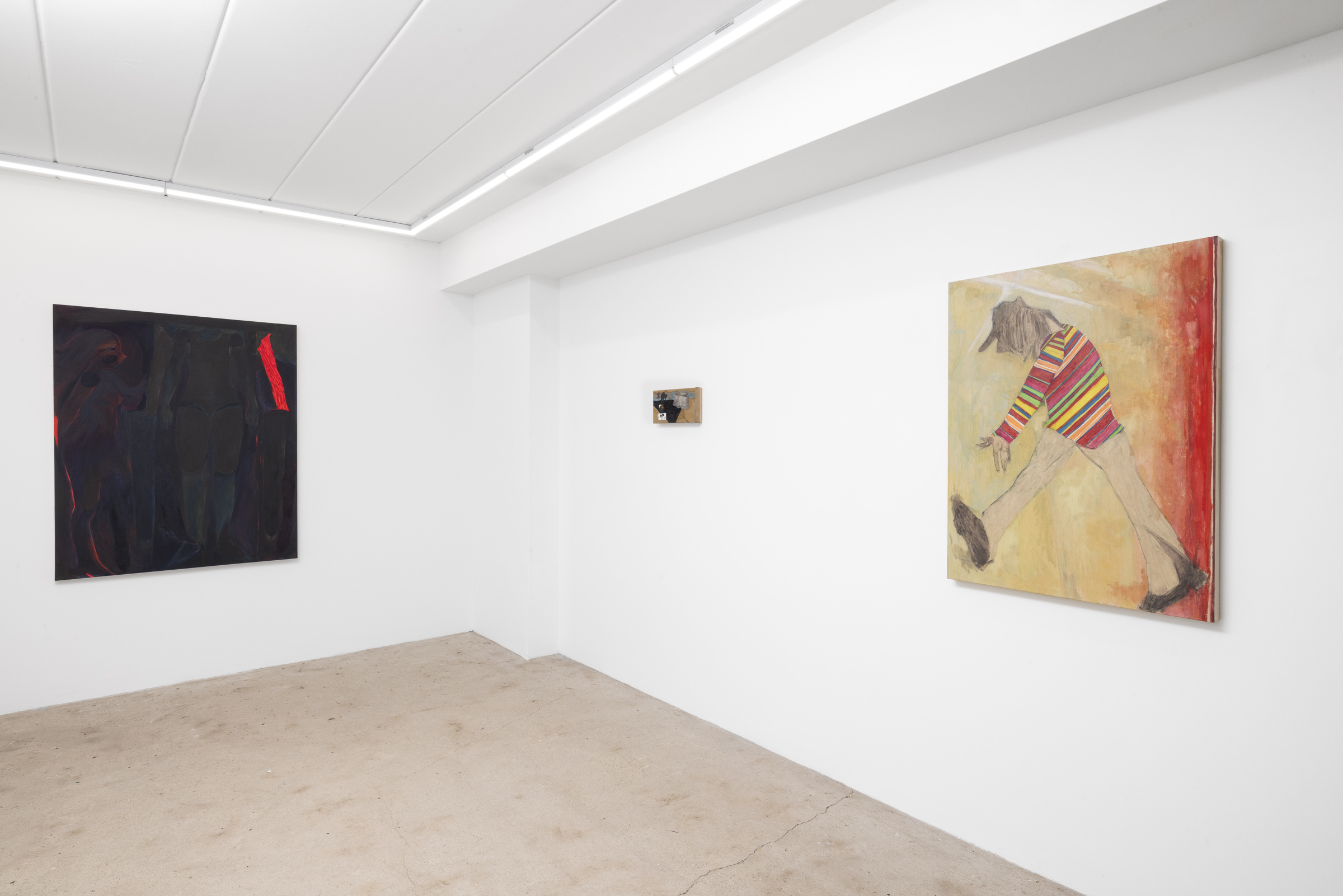
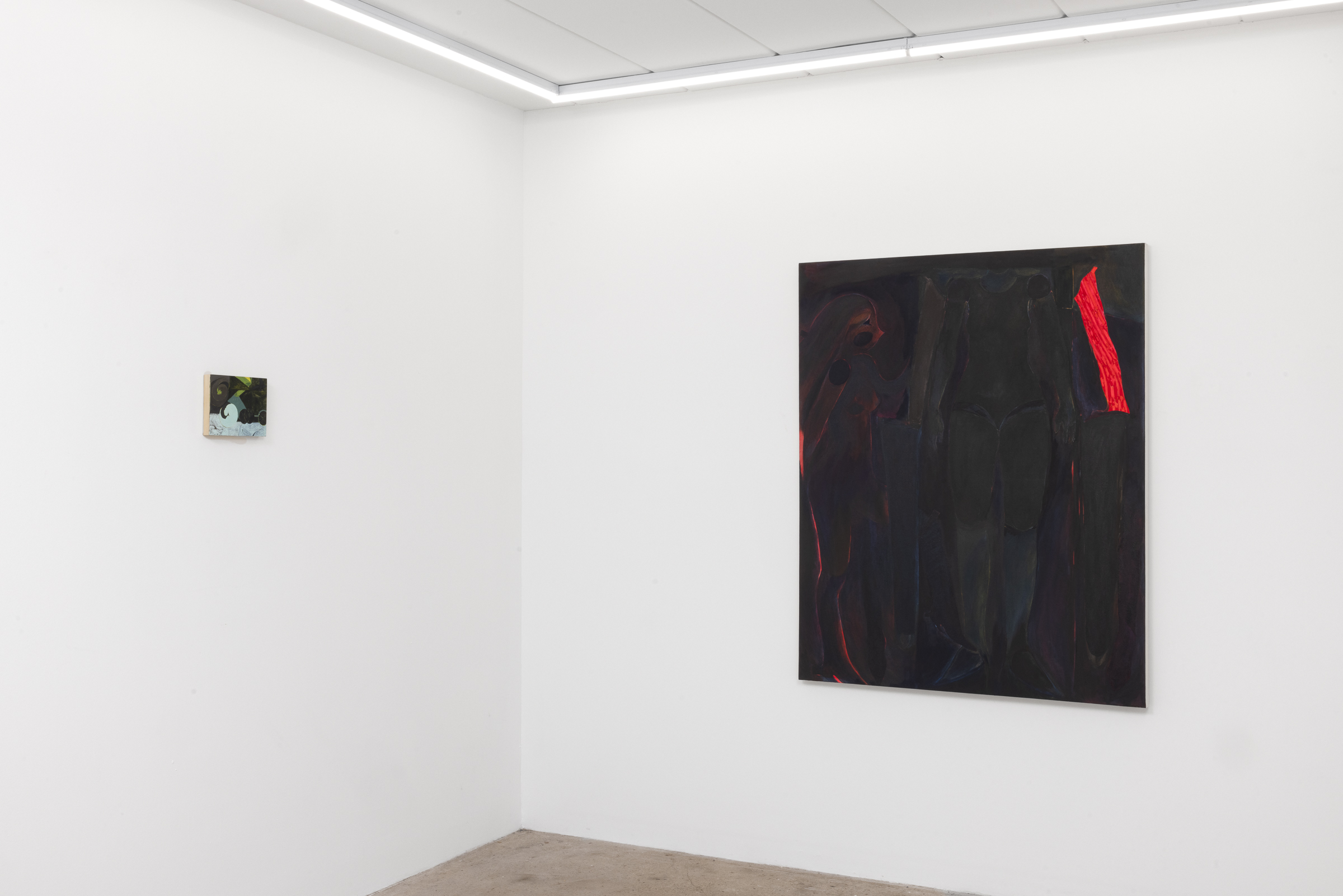
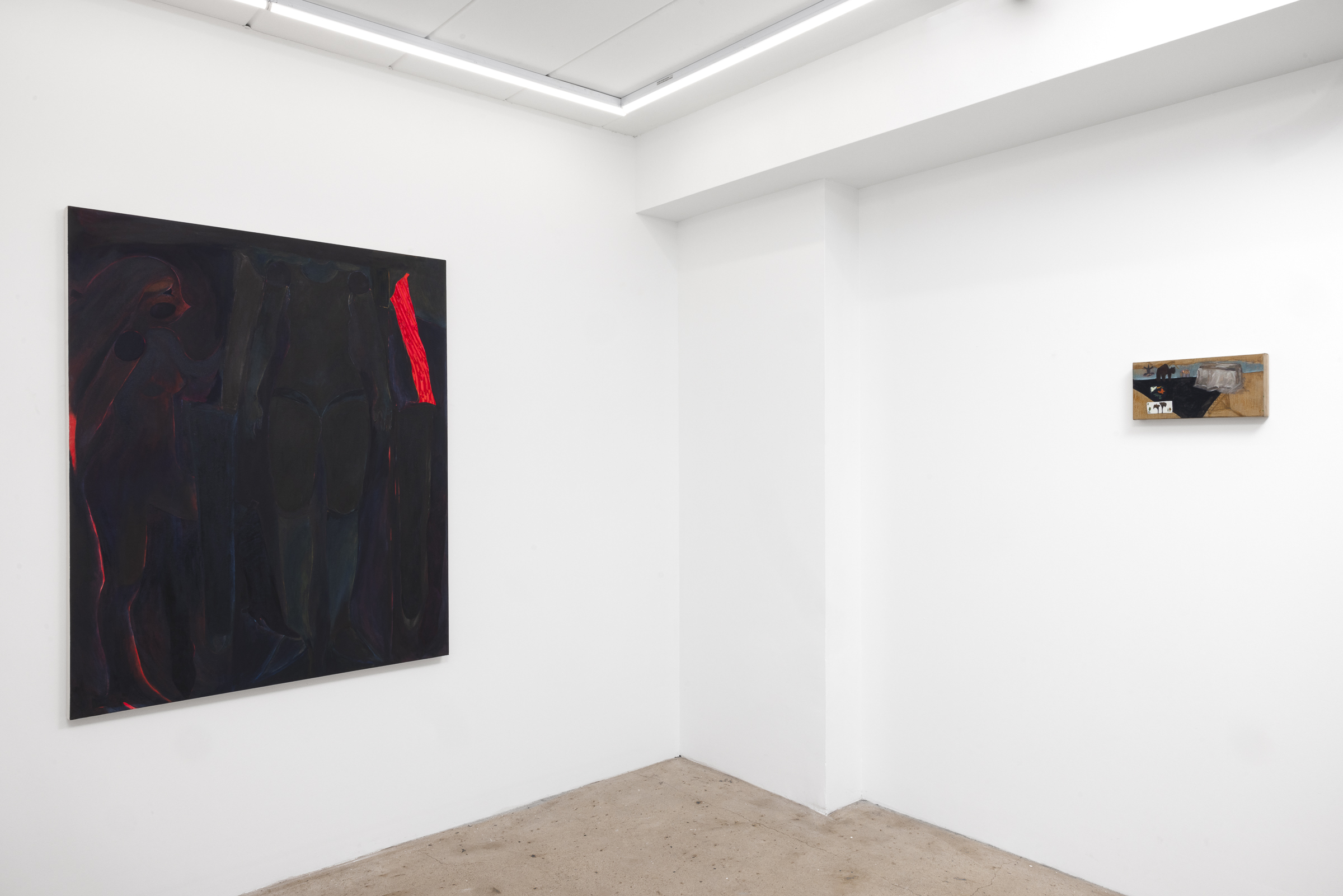
Iowa, Brooklyn, and Romance, Pittsburgh, are proud to co-present vinaigrette, an exhibition of new works by Sasha Miasnikova and Zora Moniz. The show unfolds across both galleries, like a game of call-and-response or a venn diagram, charting the constellation of ongoing dialogues and collaborations between the two artists, two galleries, and friendships in between.
vinaigrette originates from a 19th-century perforated scent locket, often designed with compartments like slices of an orange. These ornaments held sponges soaked in vinegar or aromatics, worn as necklaces or concealed in pockets; whiffed for distraction and comfort. vinaigrette also refers to salad dressing, in which separate parts are alchemically emulsified into a cohesive whole.
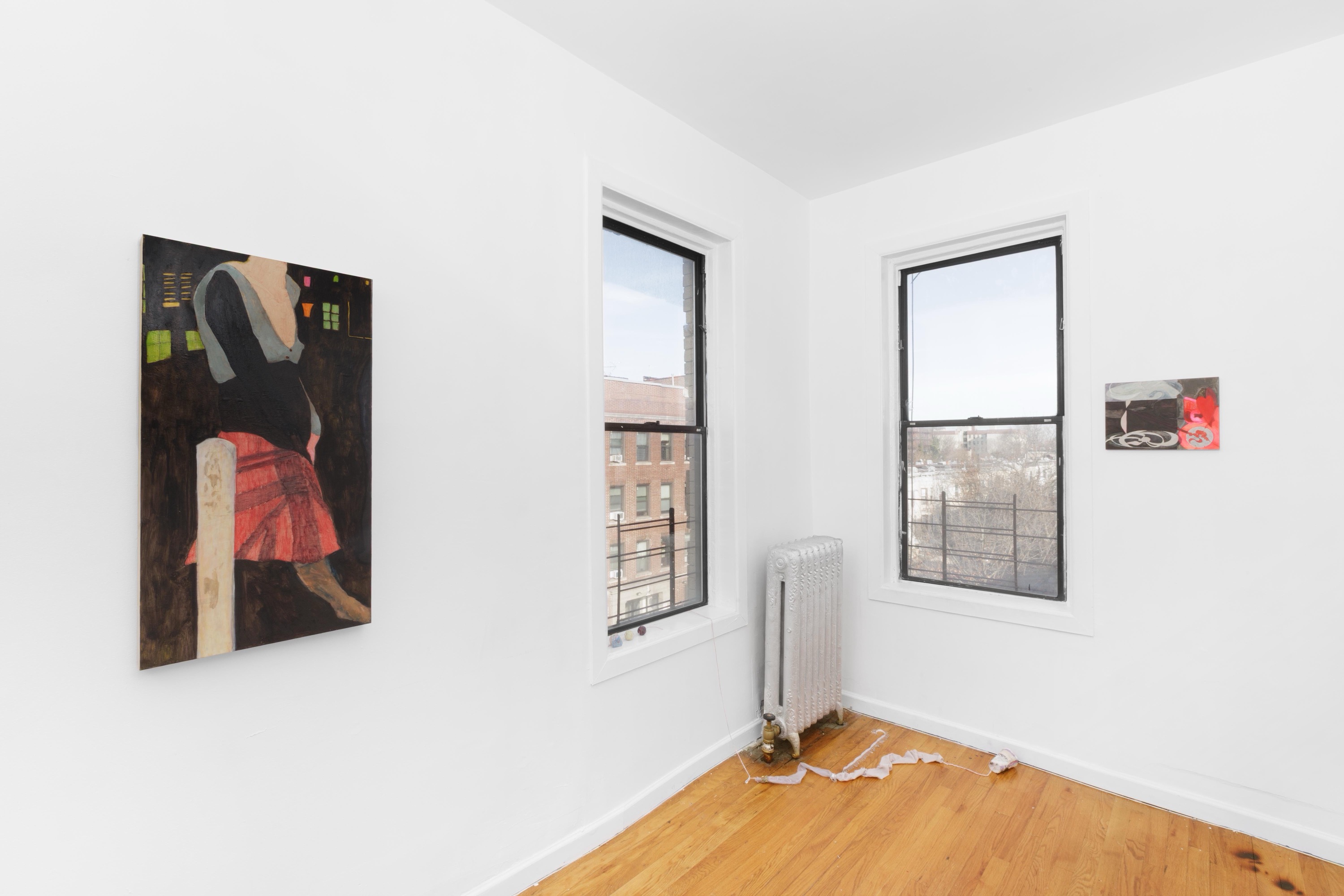
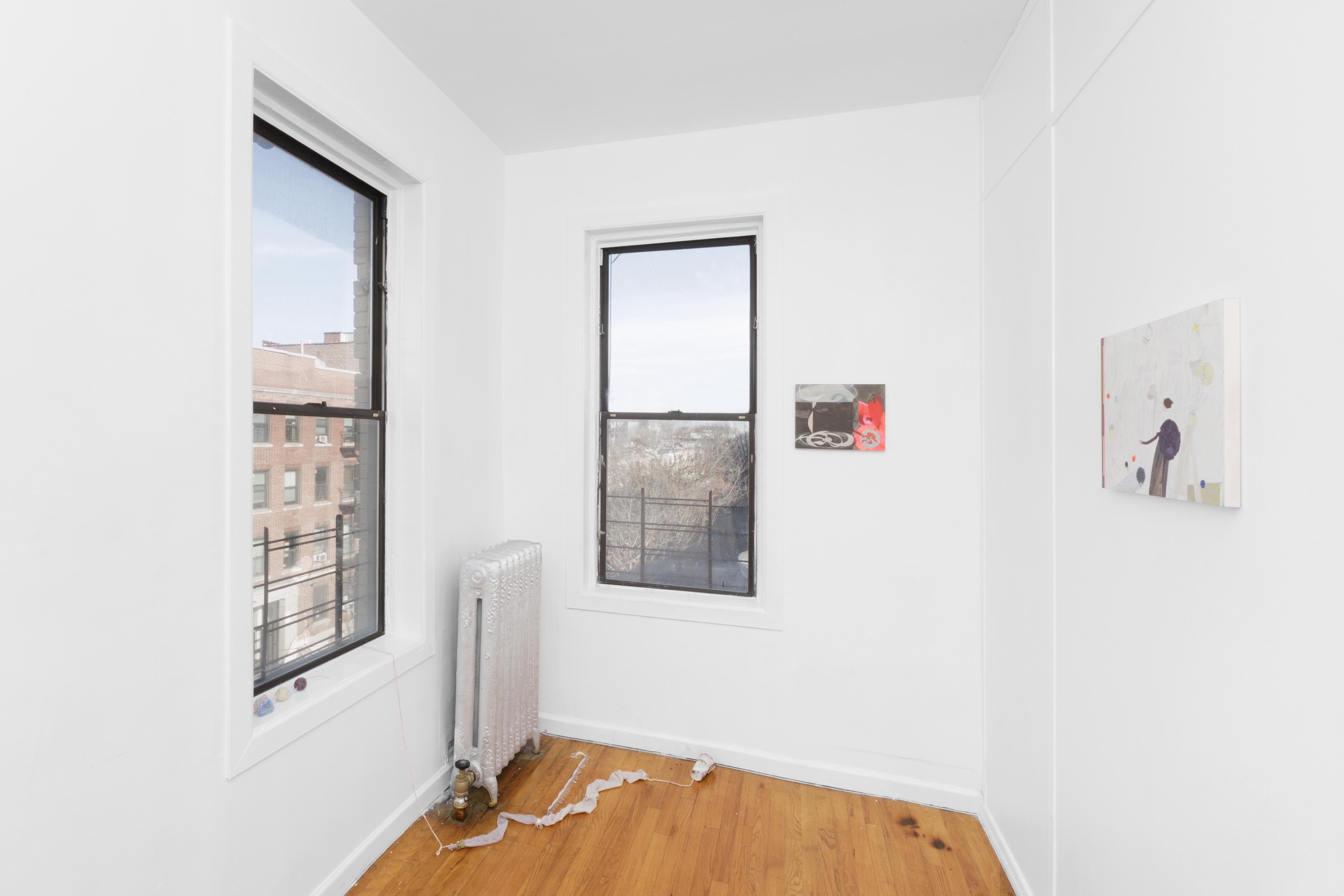
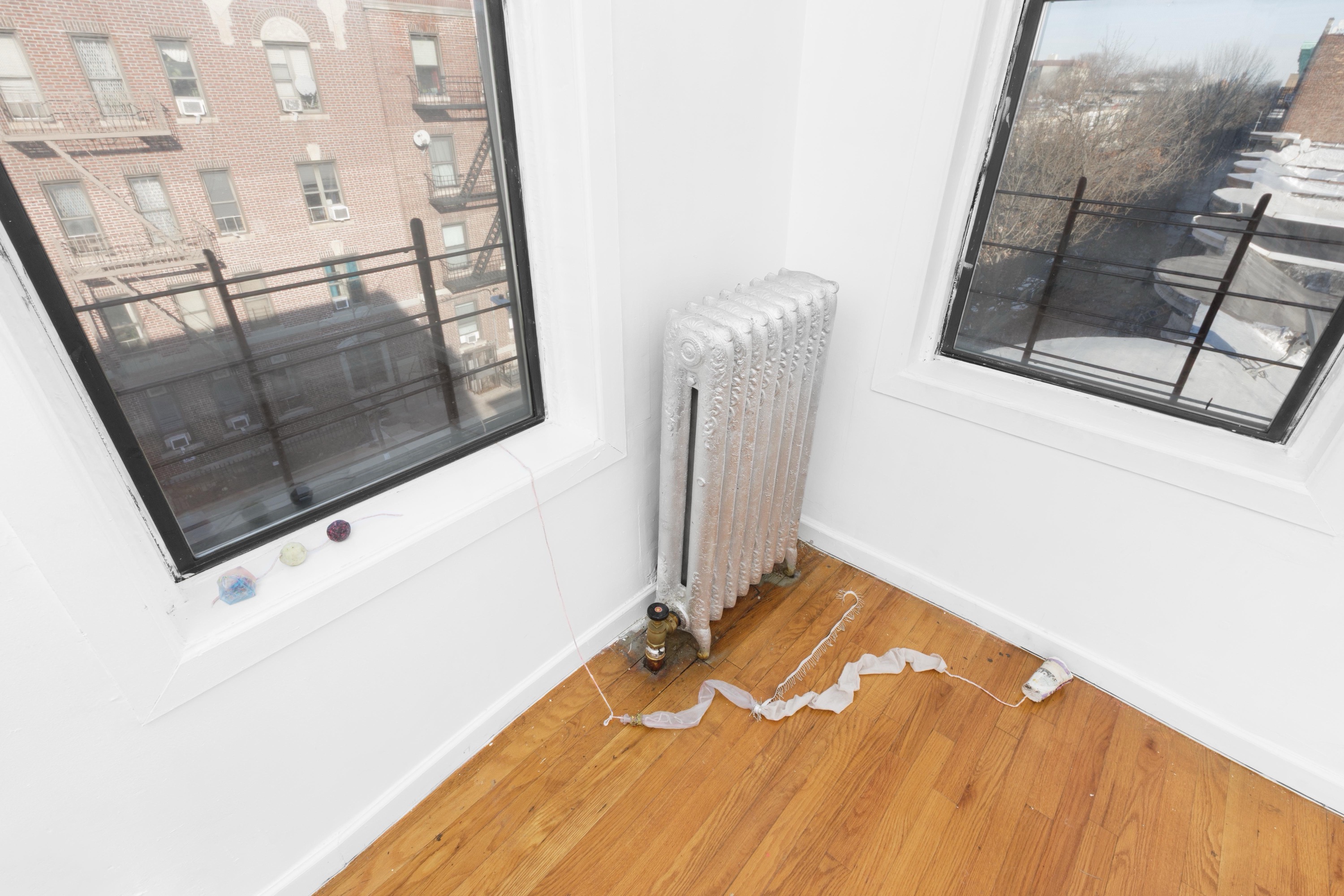
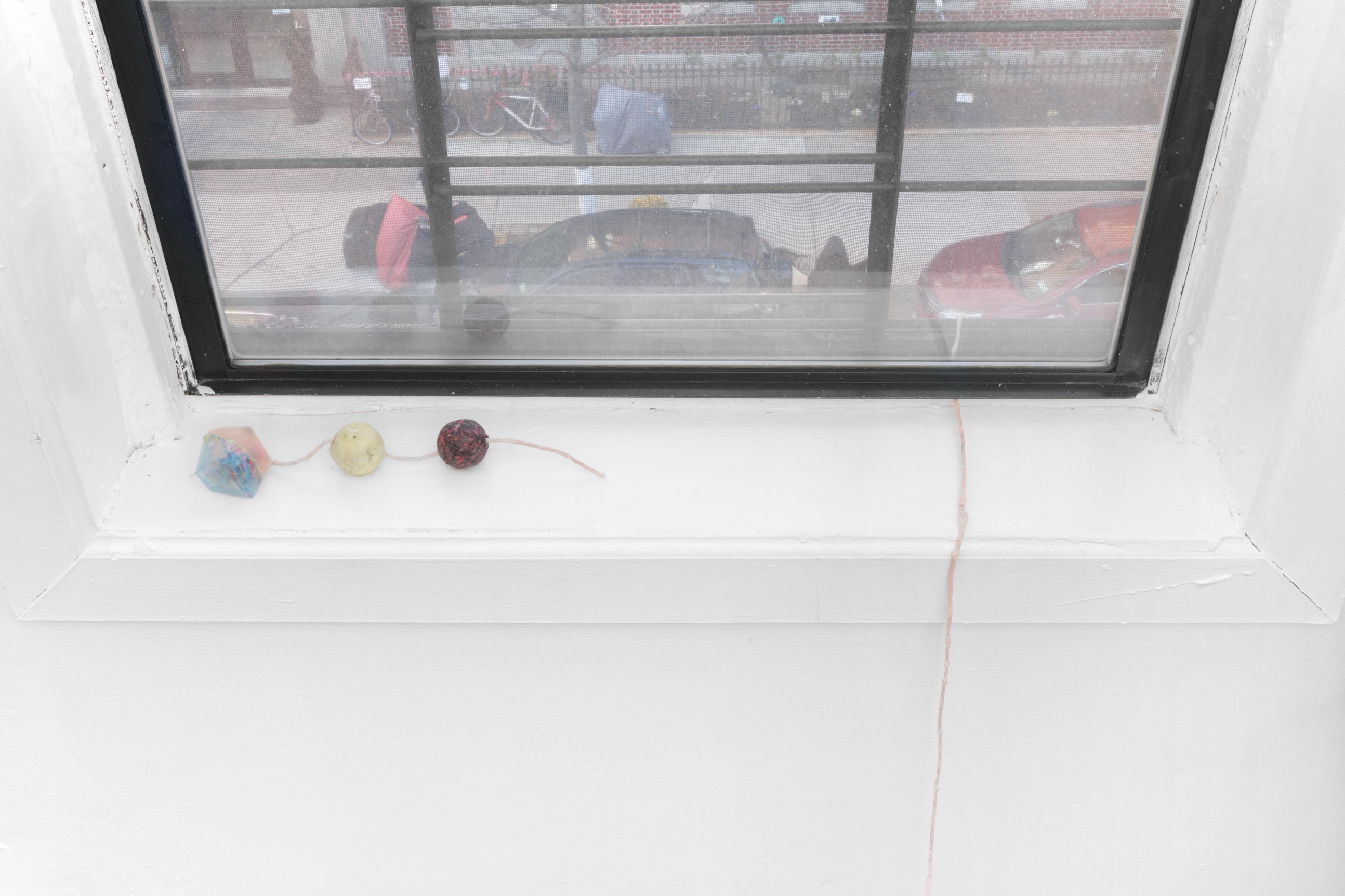
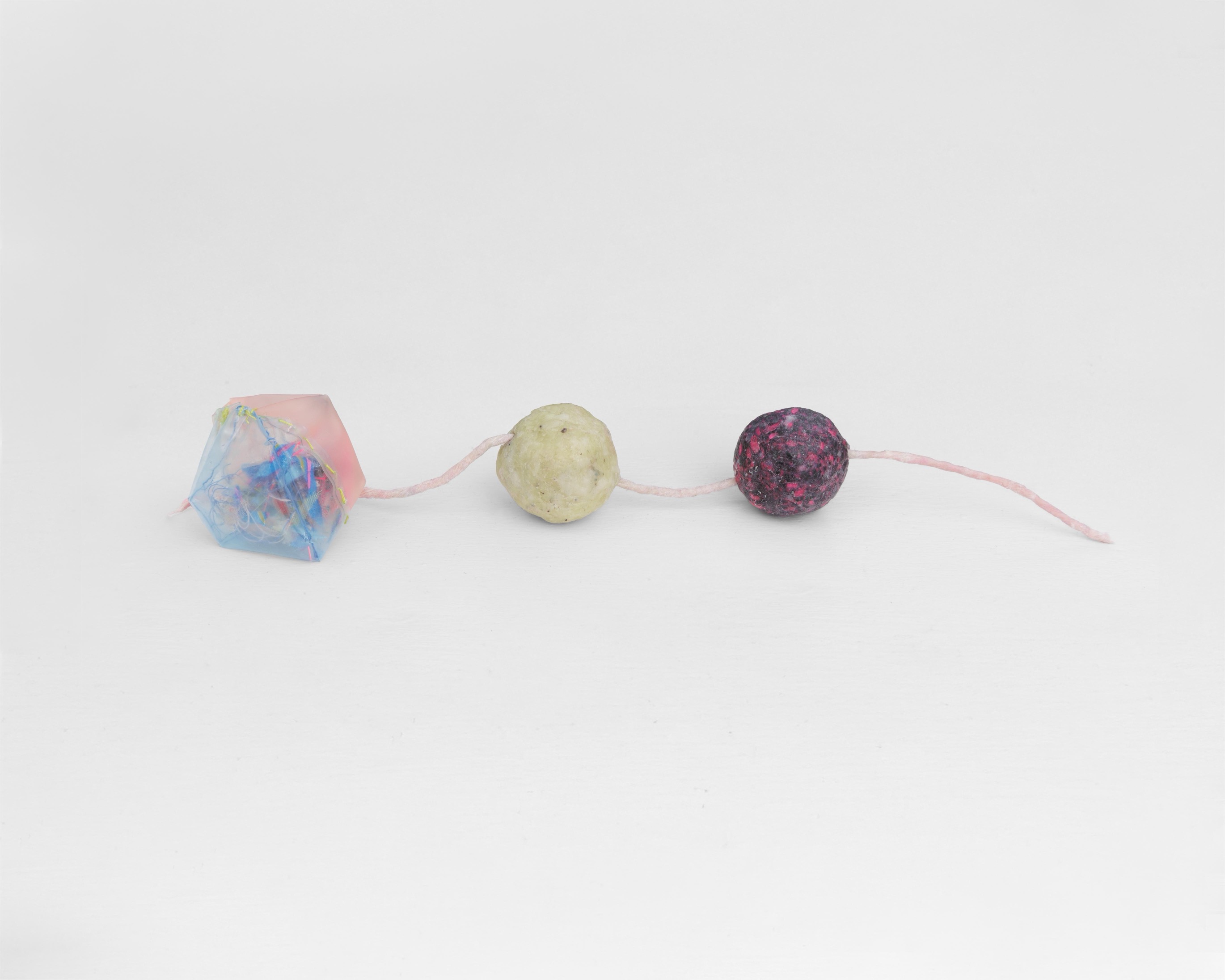
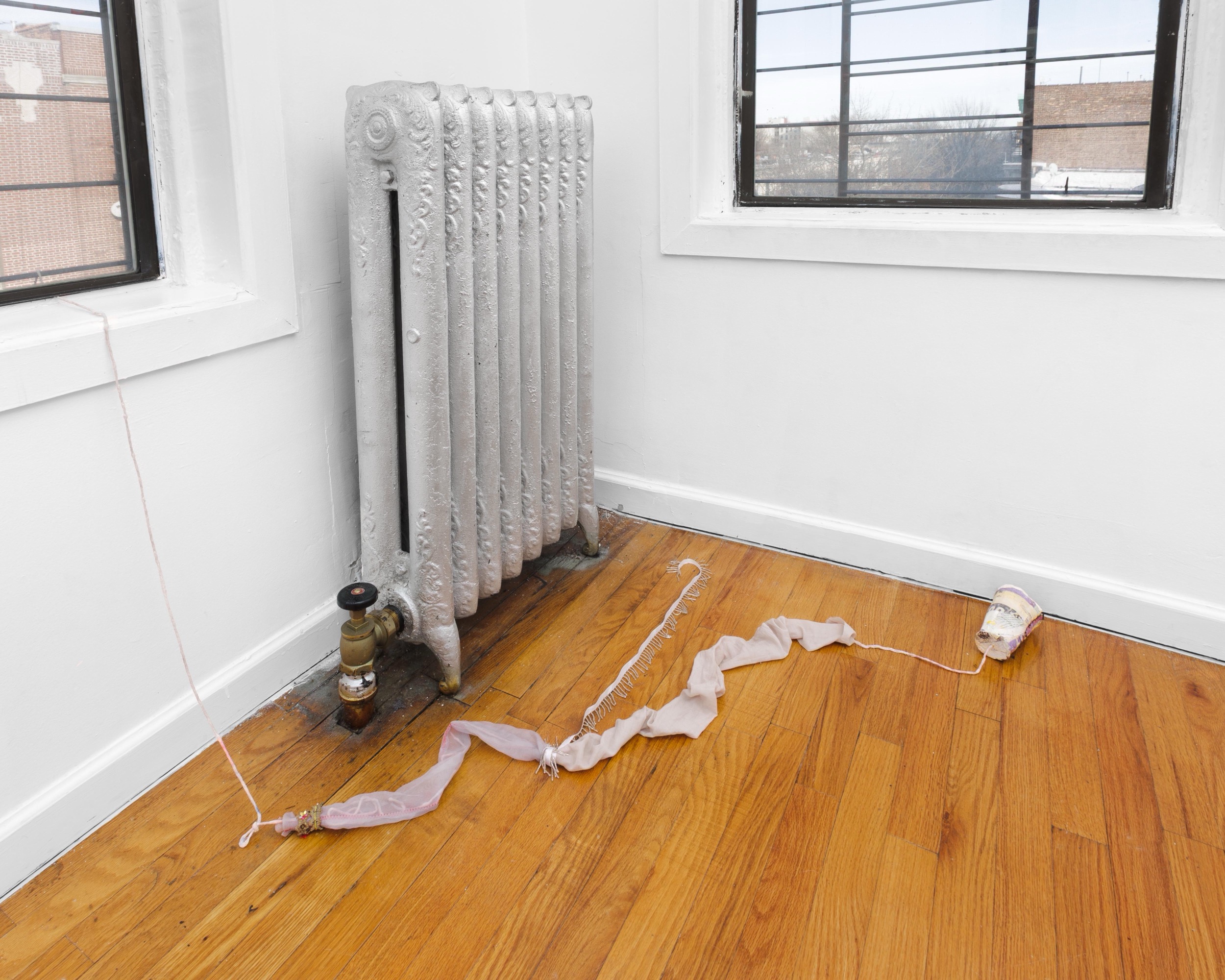
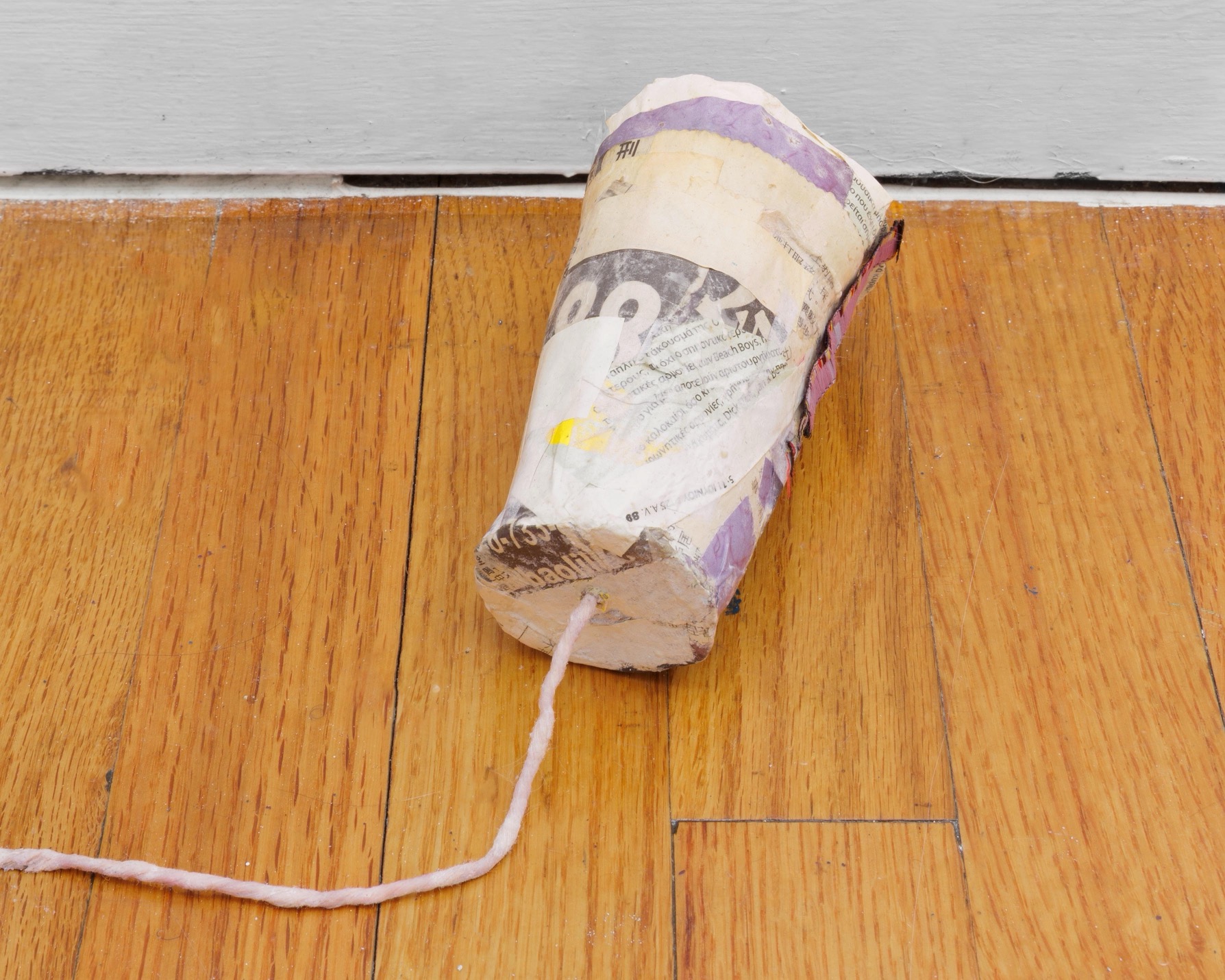
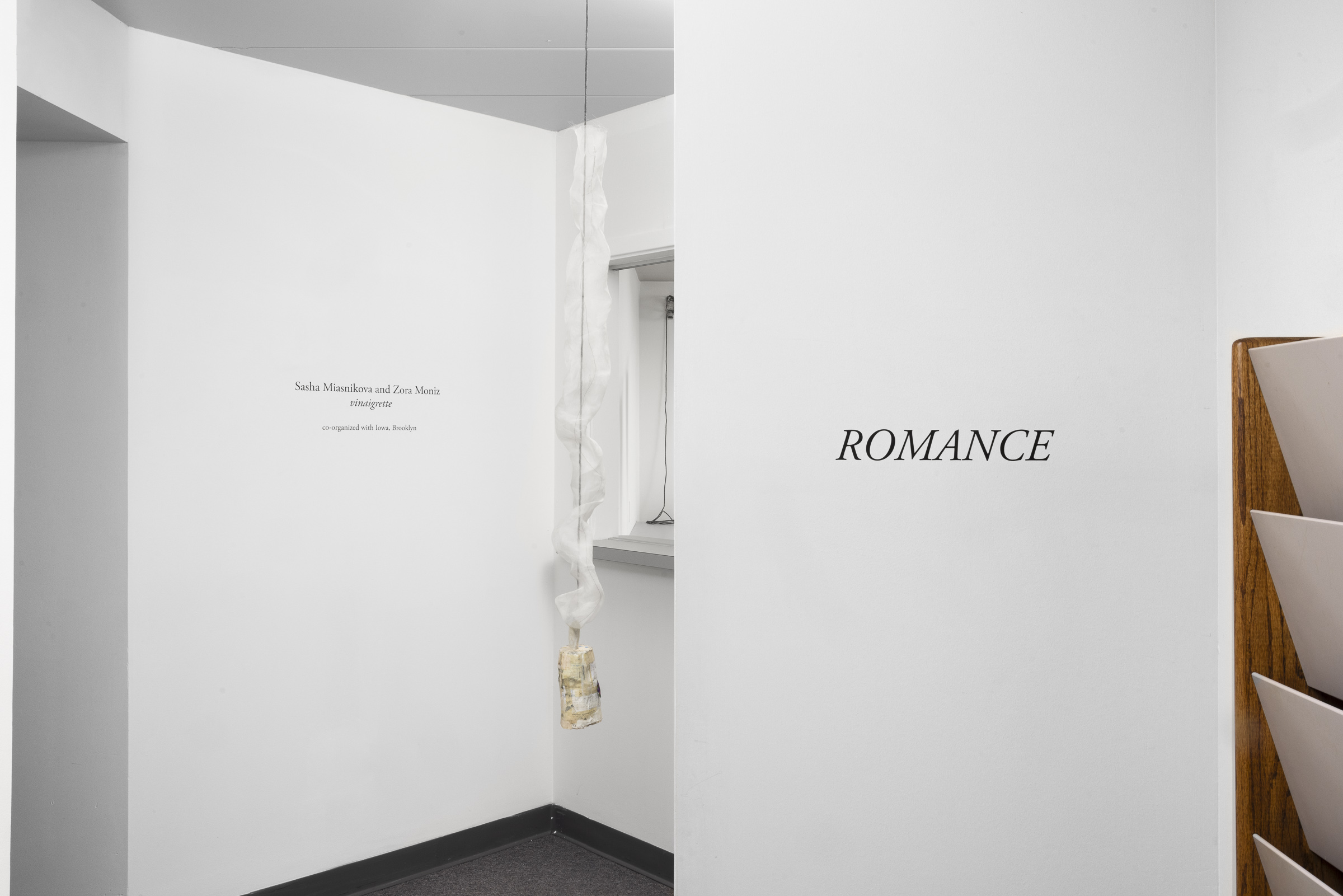
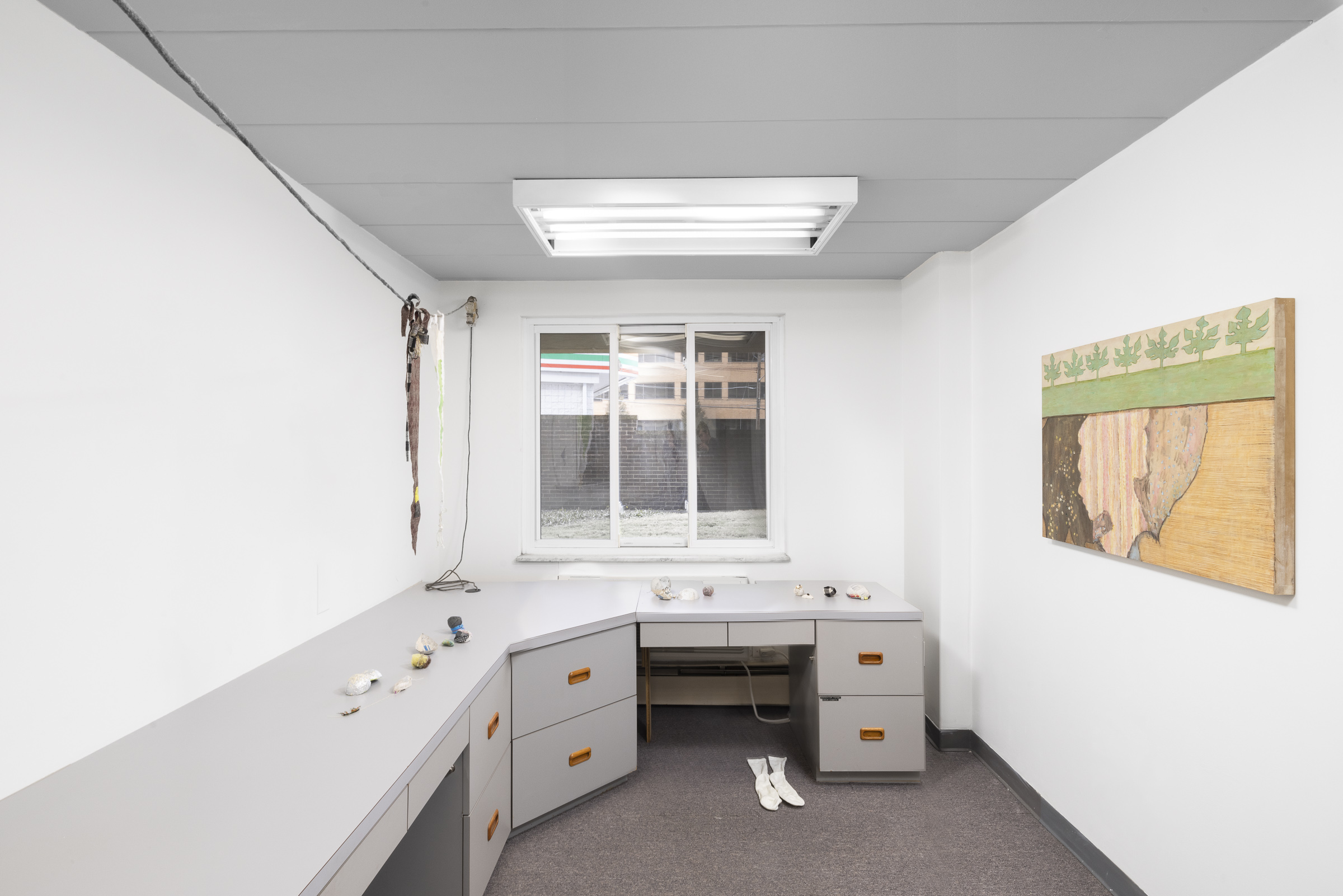
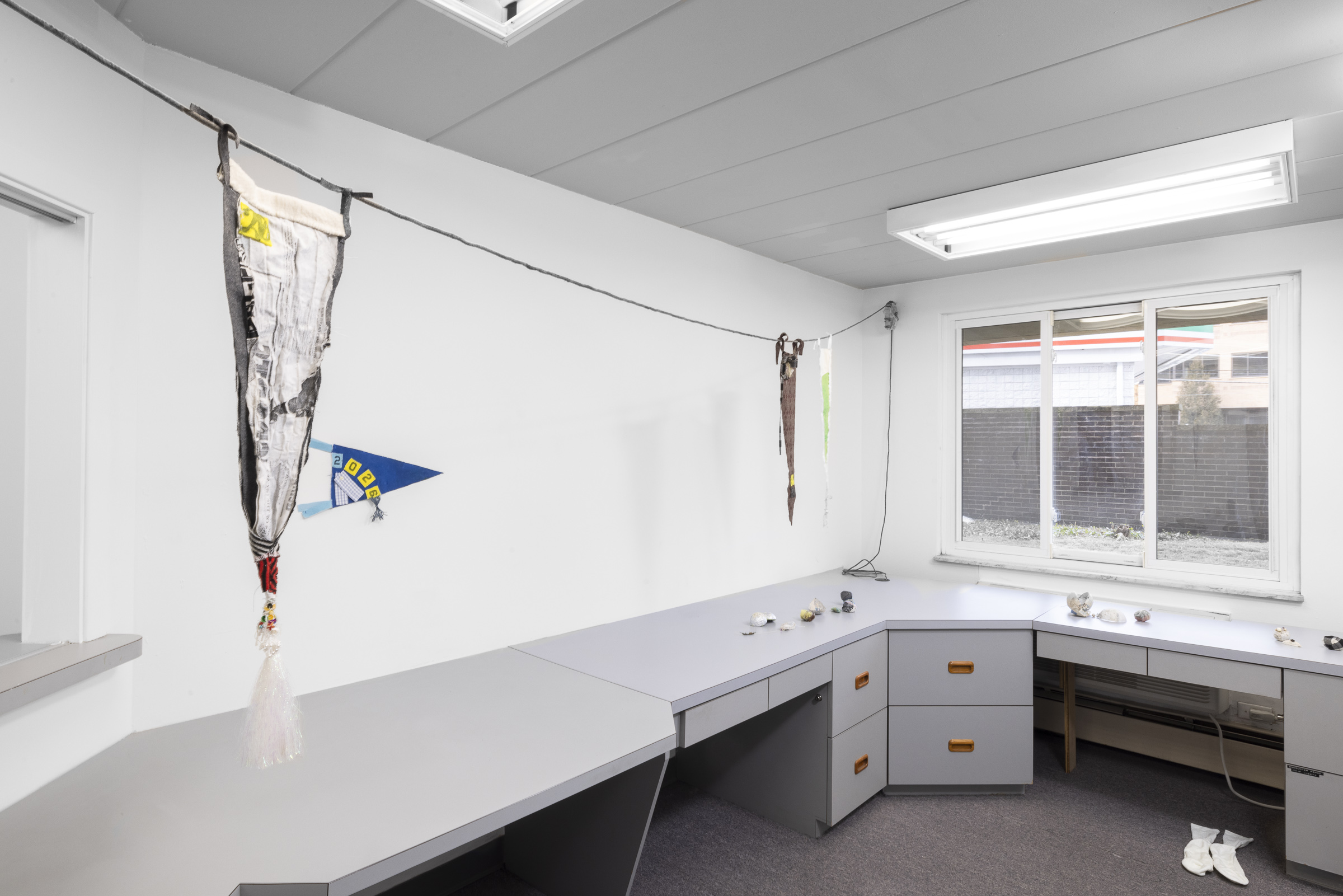
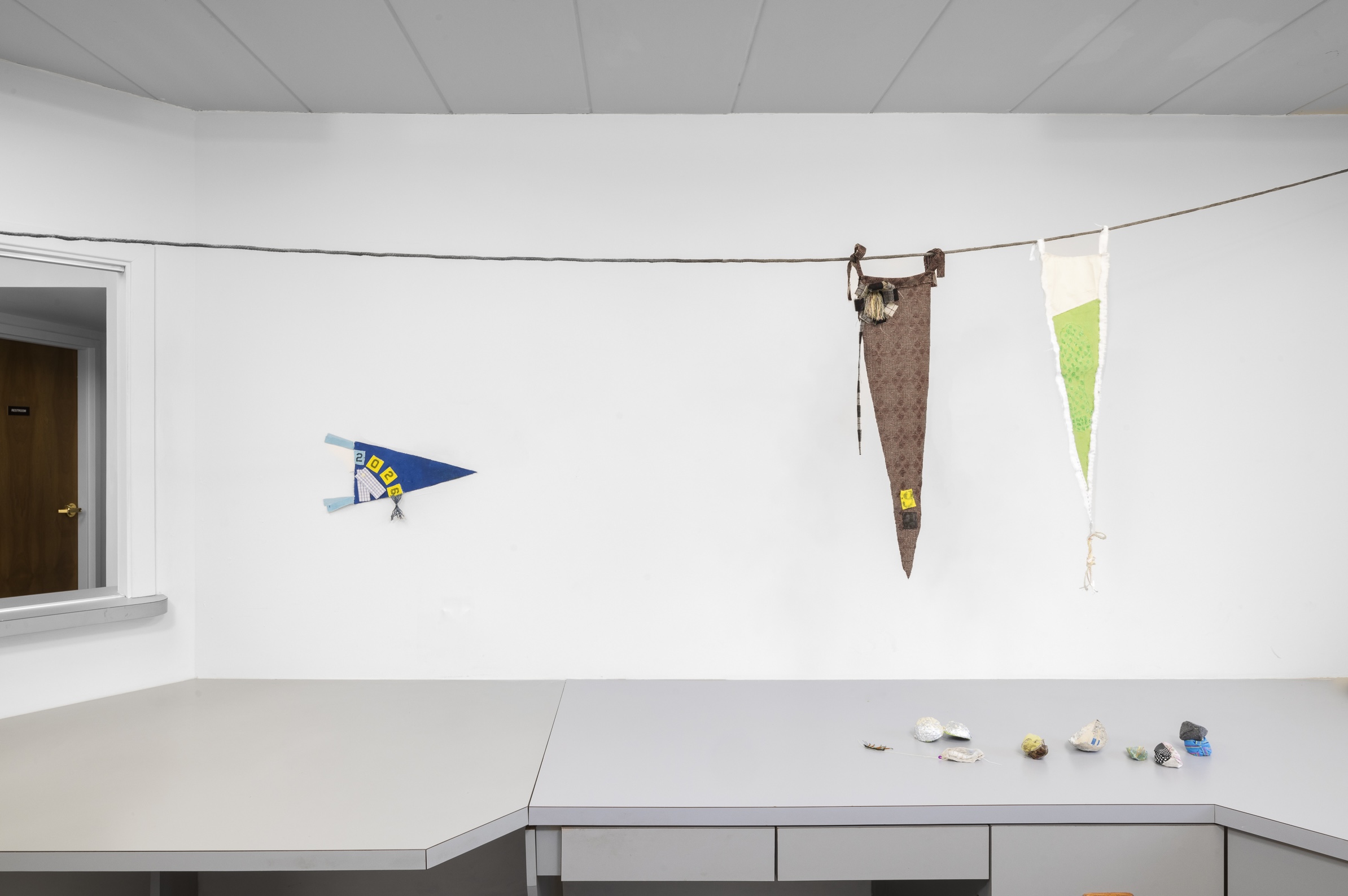
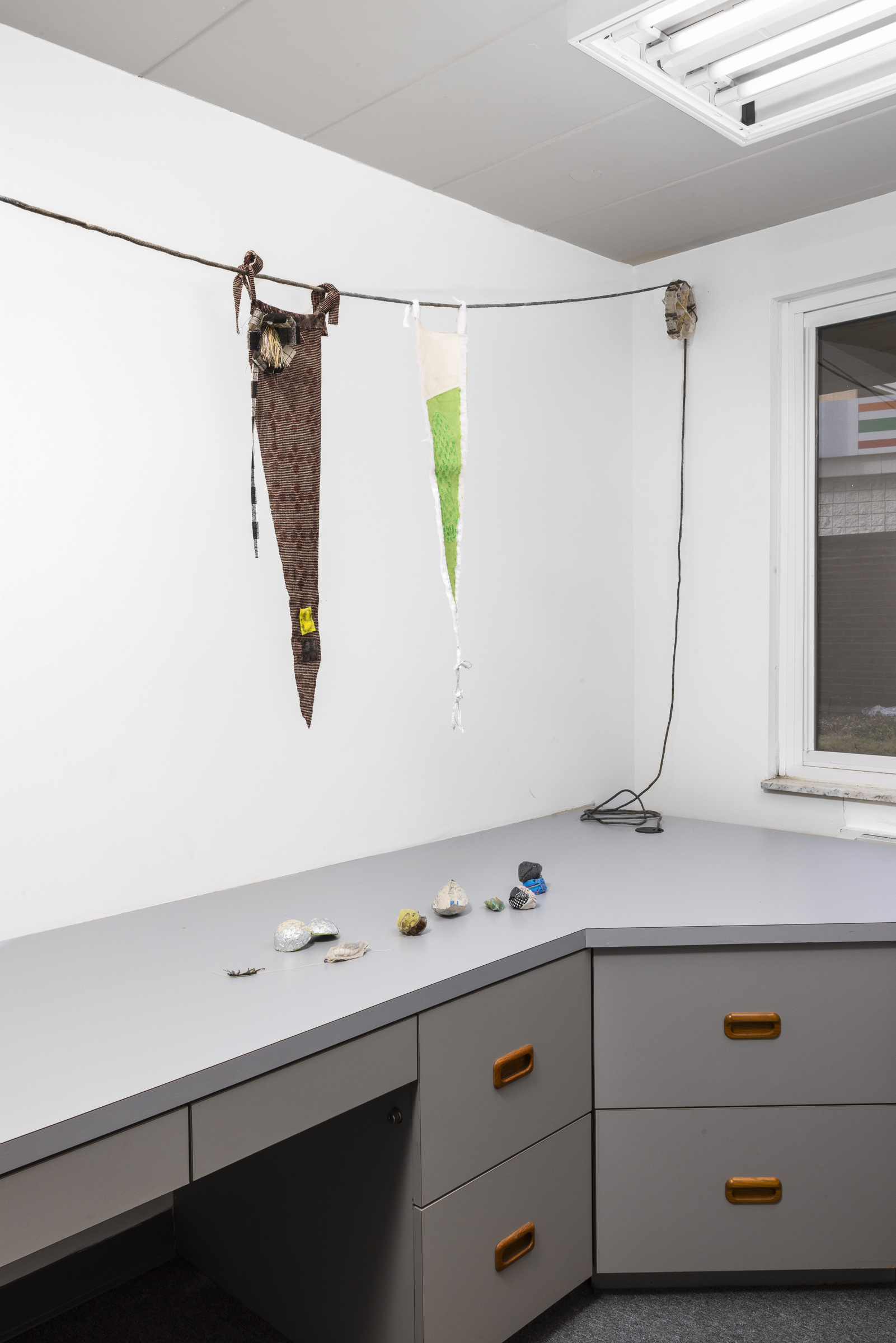
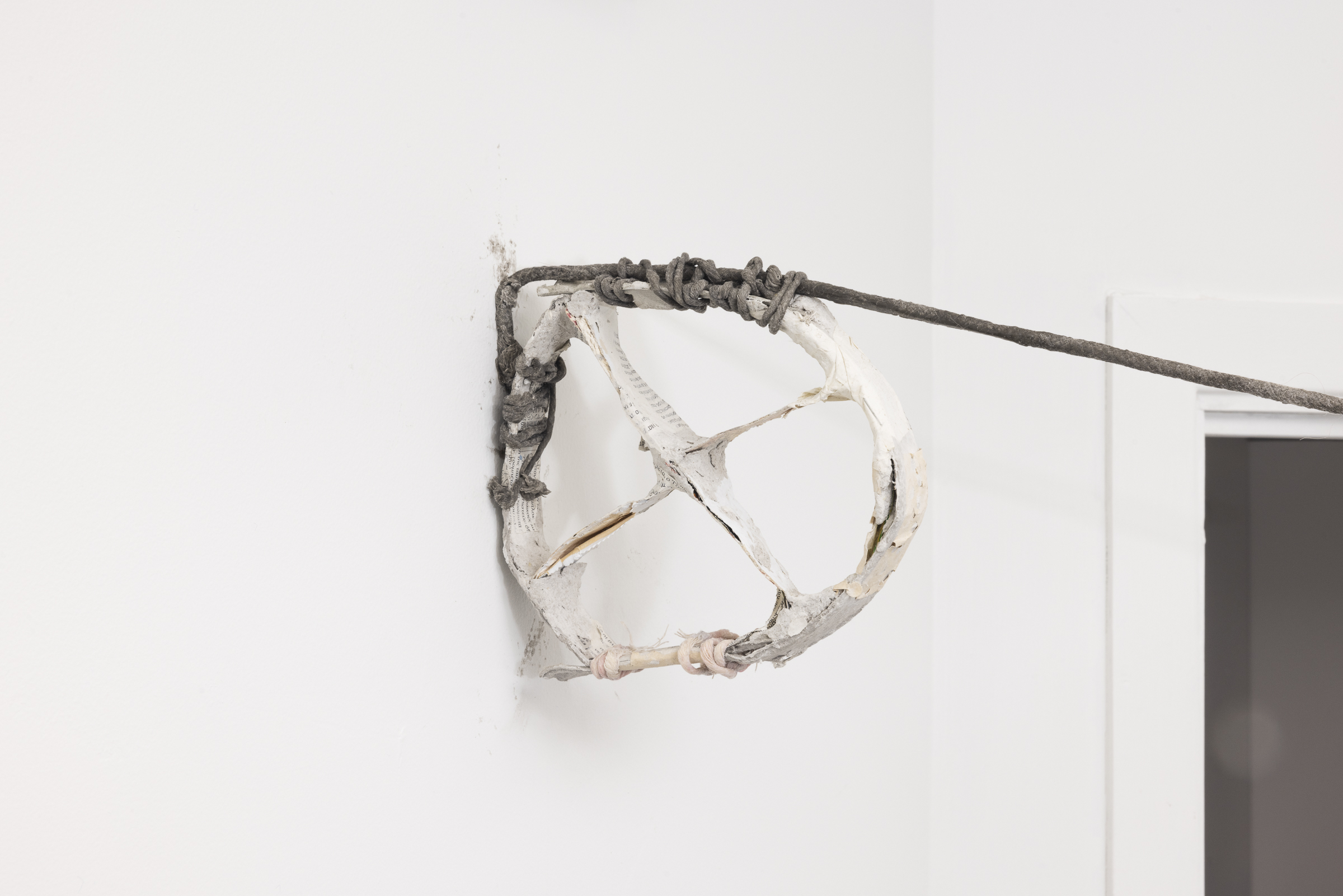
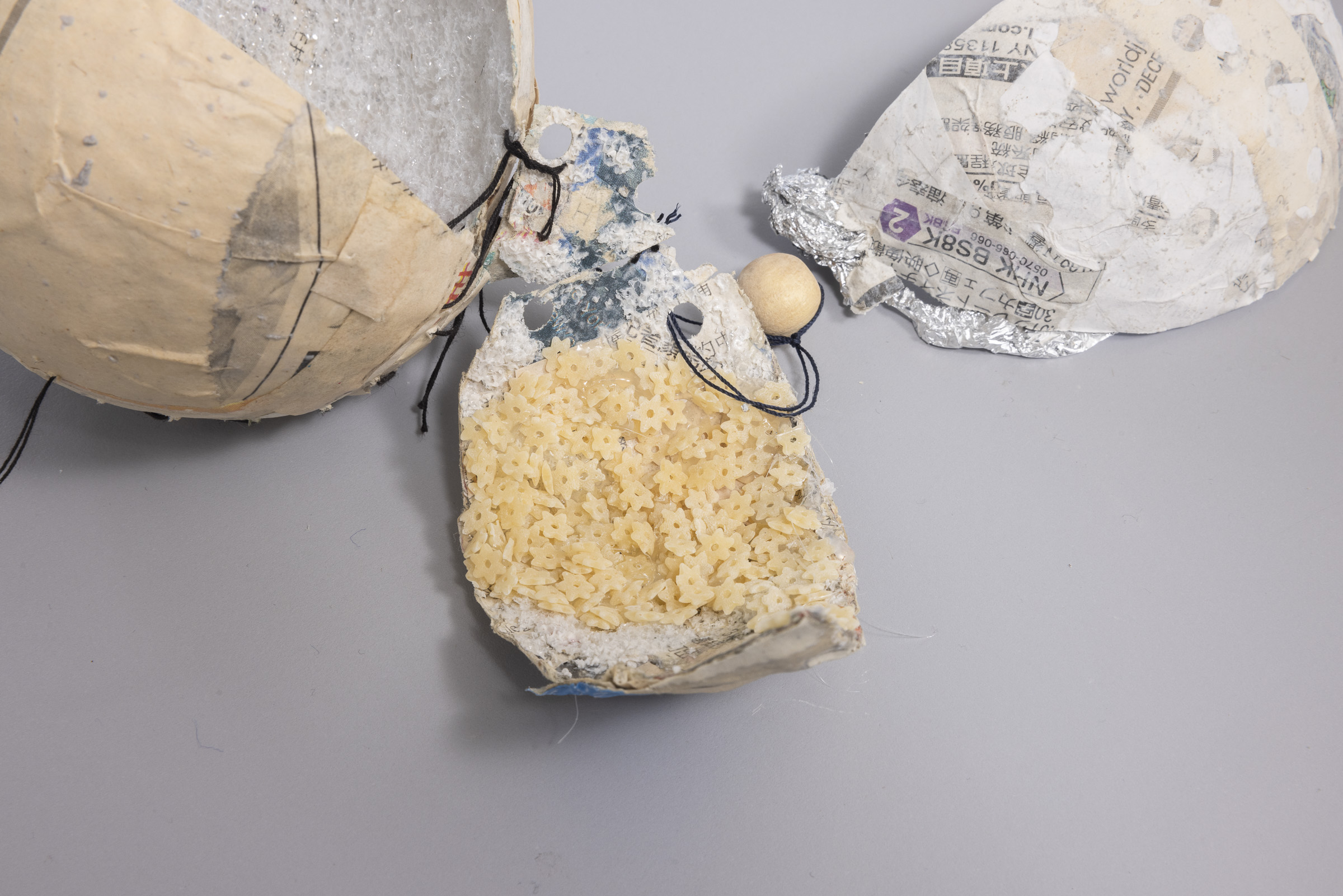
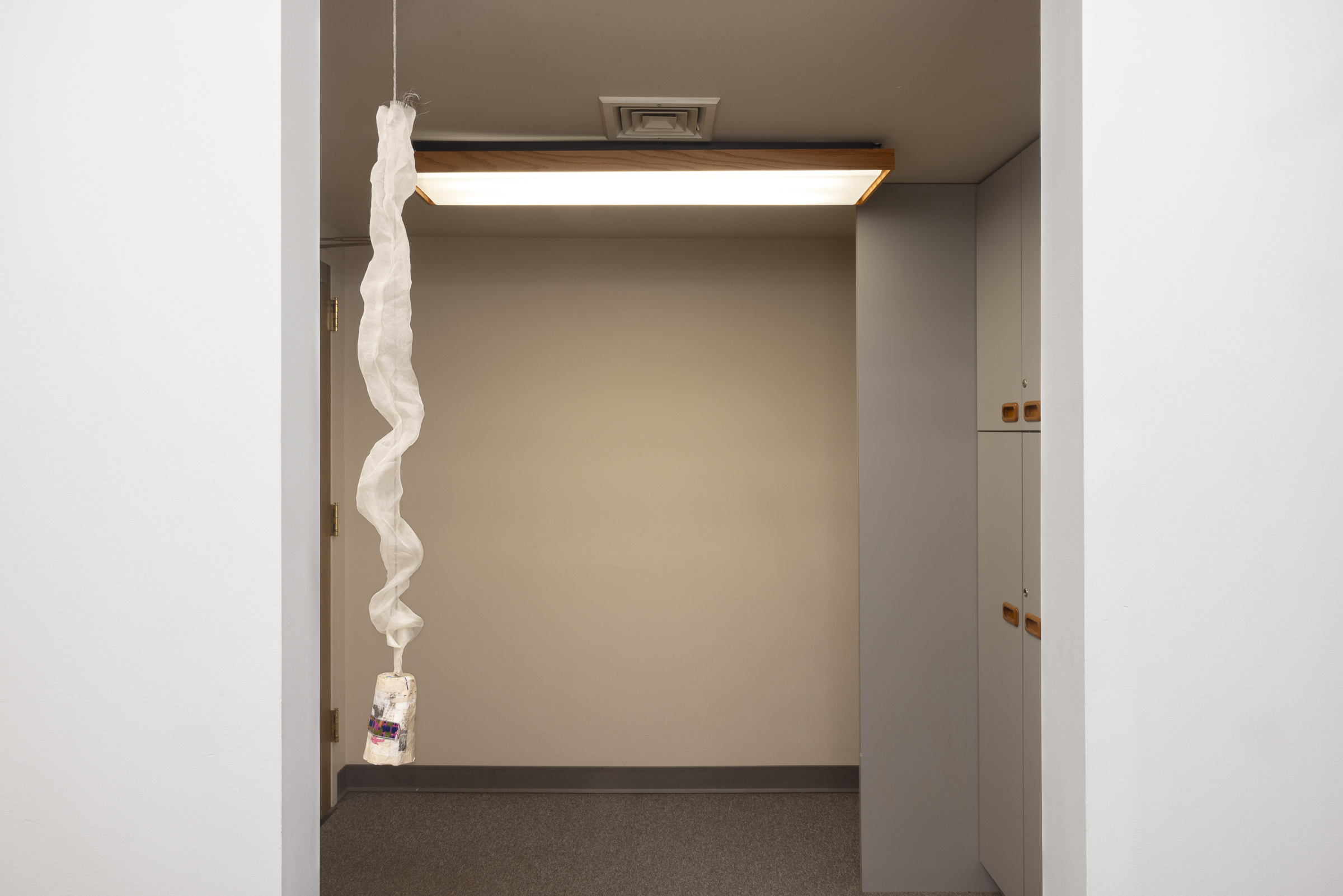
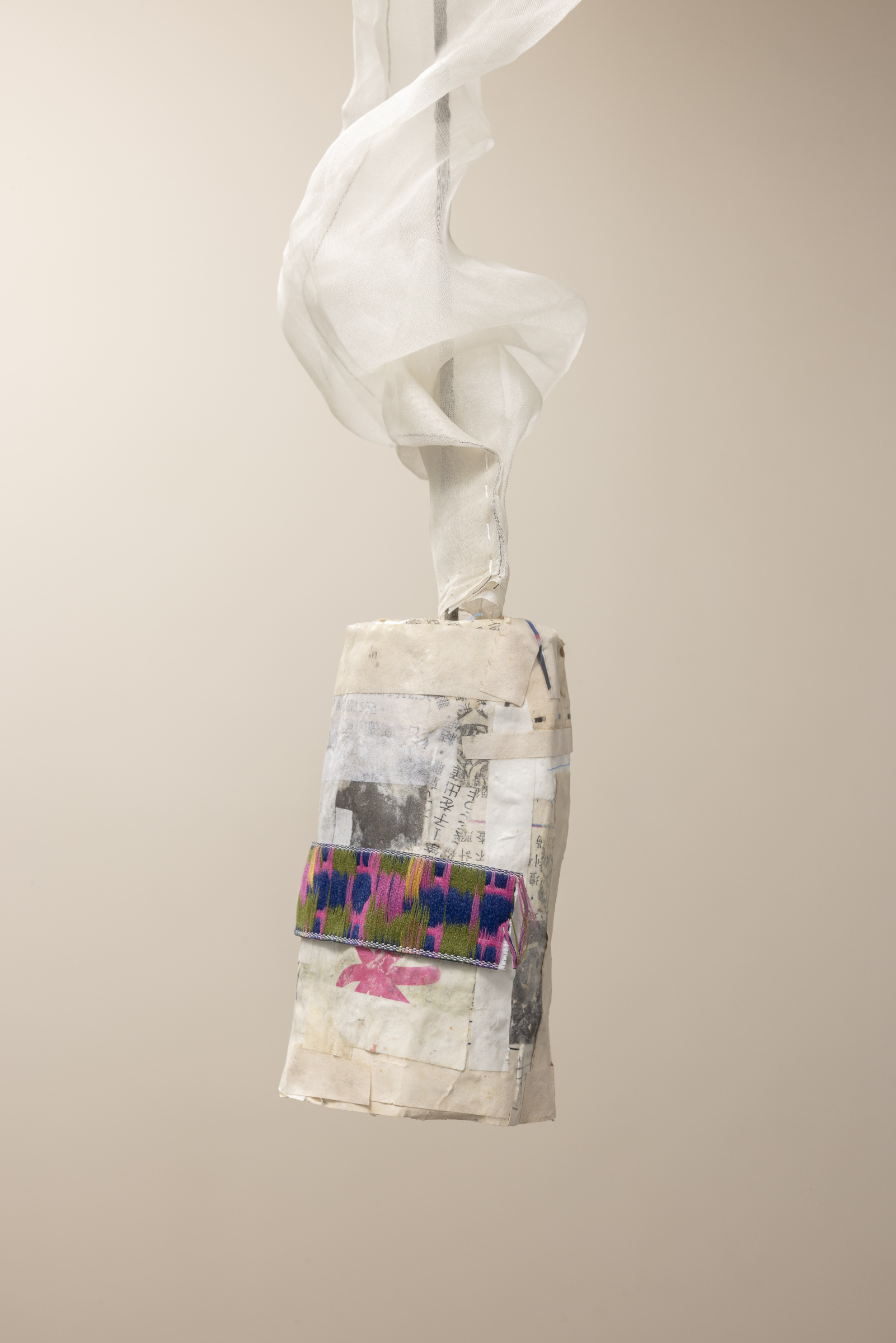
The artists’ direct exchange occurs in their collaborative installations, negotiating display and concealment with interpretations of the vinaigrette form. Scented soaps made by Moniz with her grandmother are arranged on perfumed waxed string by Miasnikova. The architecture of a clothesline is used to display pennant flags, a hanging curtain, and a wheel mechanism. Papier-mâchéd maracas filled with dried beans and sewn hackysacks containing rice and herbs are dispersed throughout the spaces. A cup on a string telephone links both the Iowa and Romance galleries.
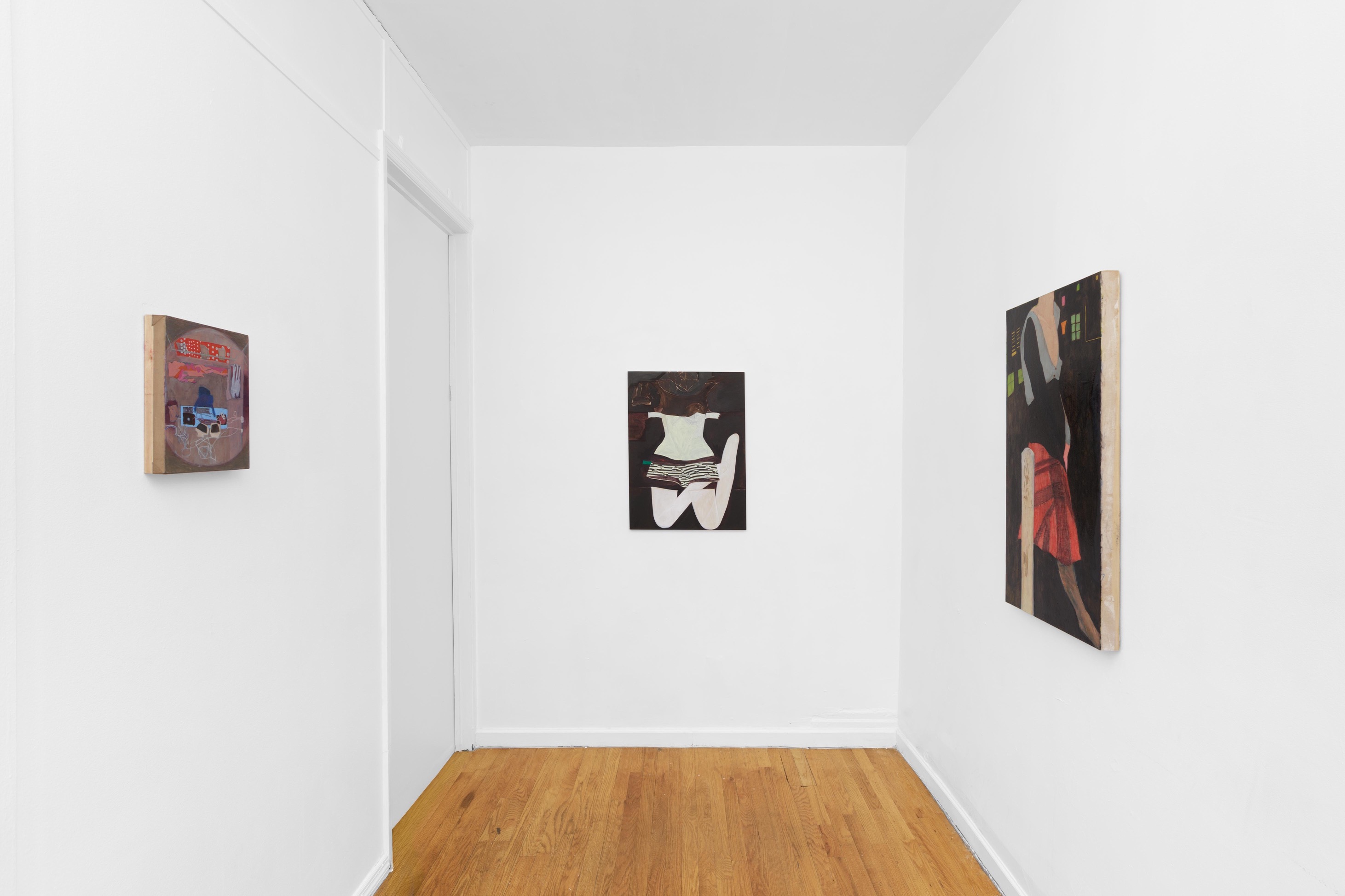
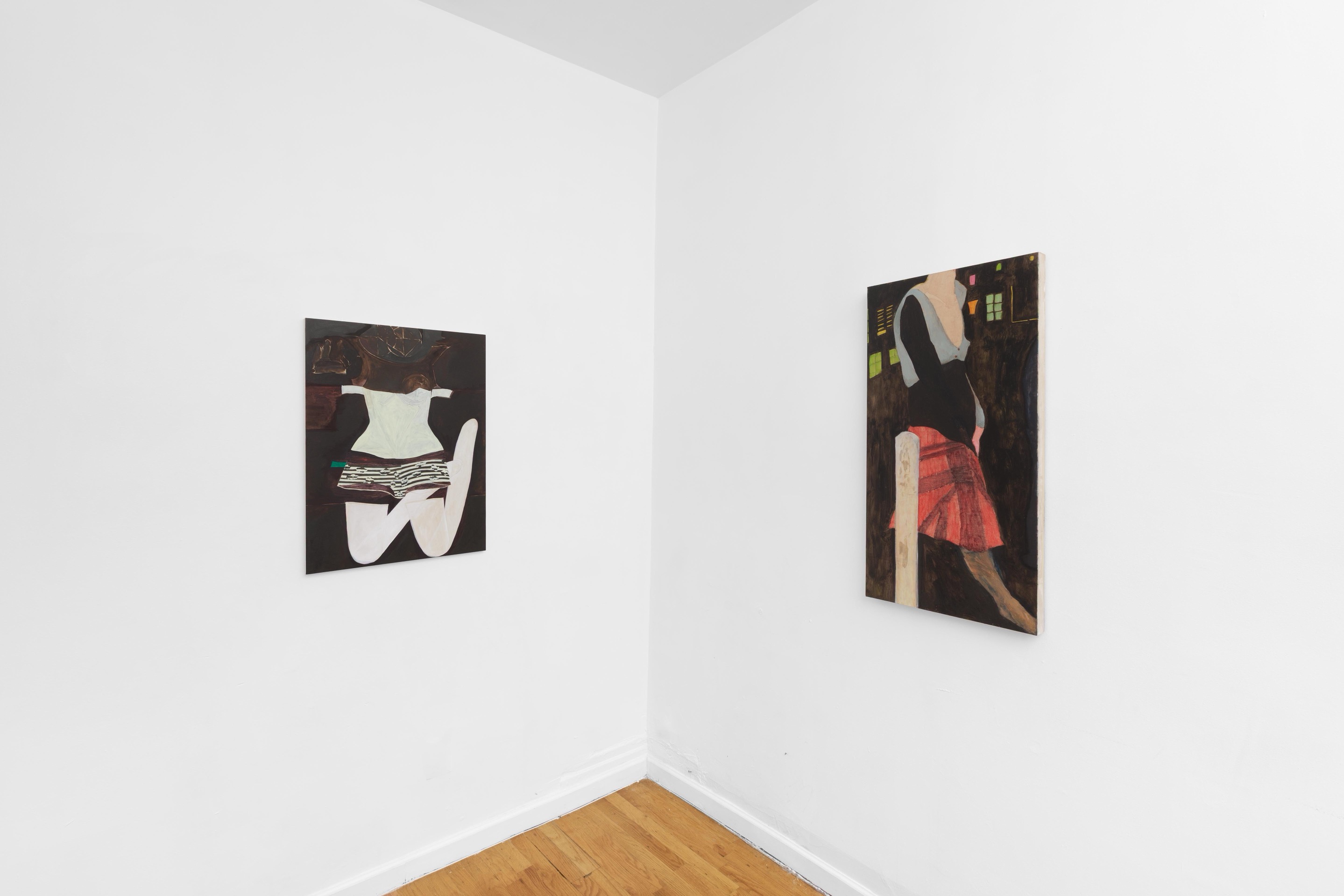
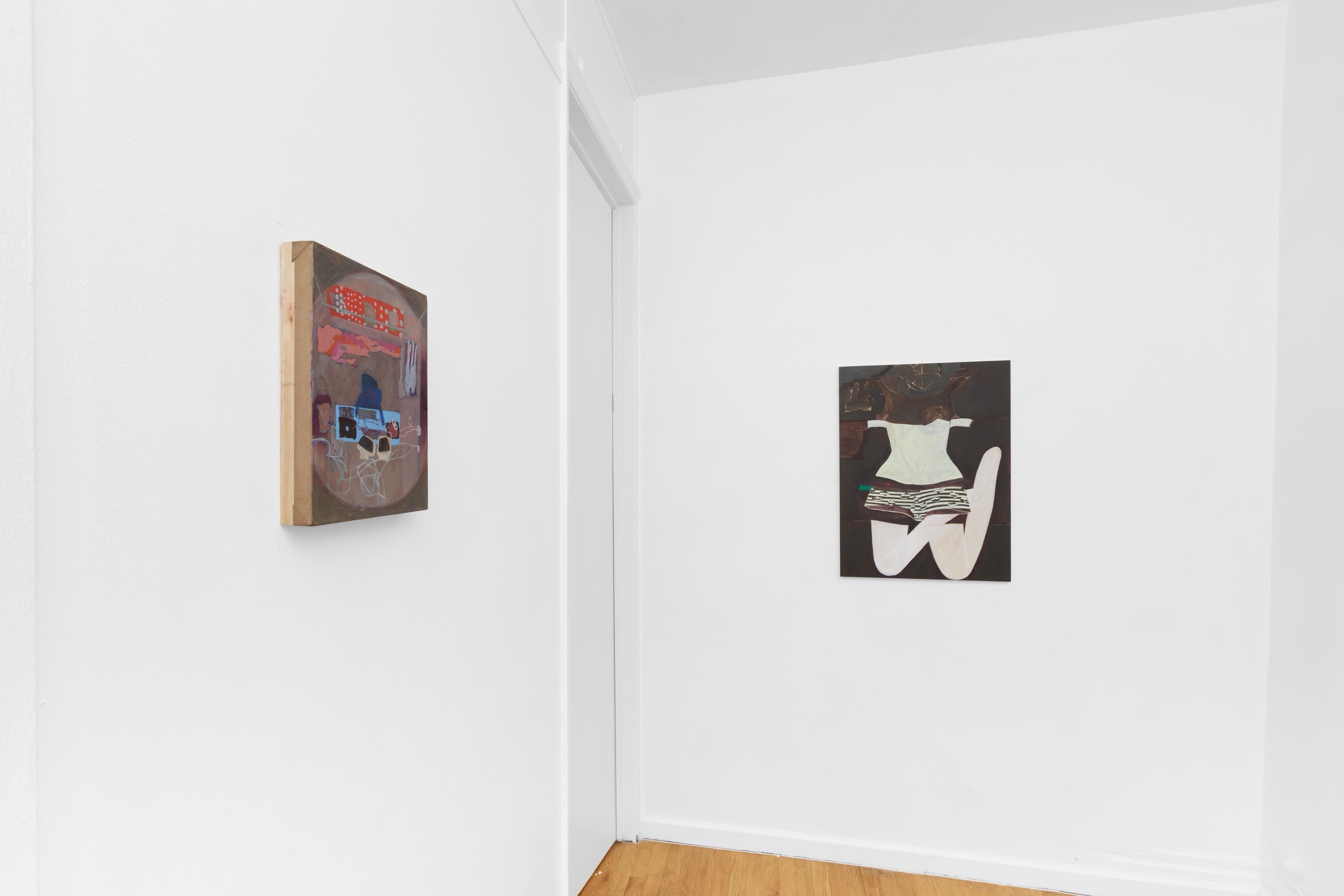
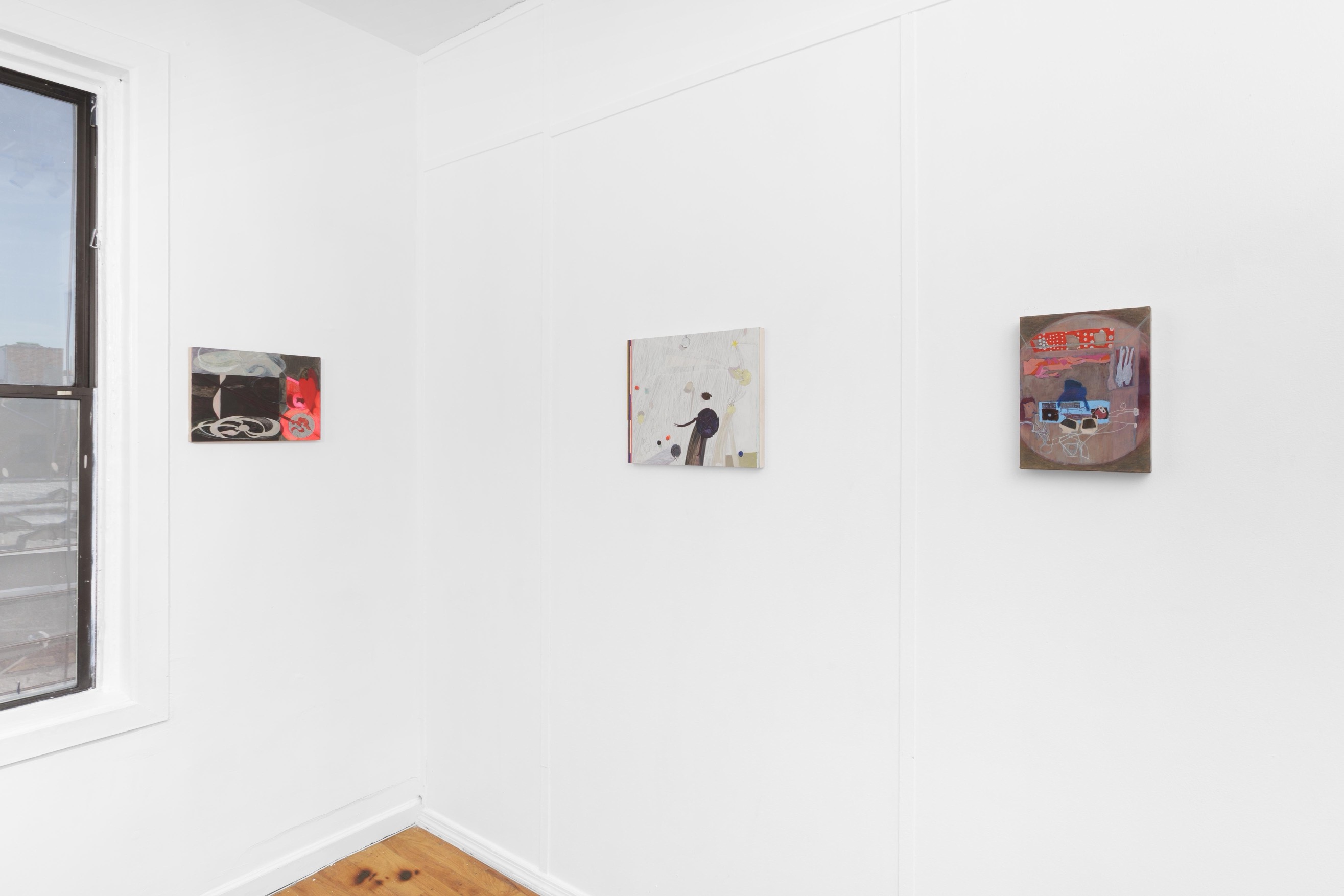
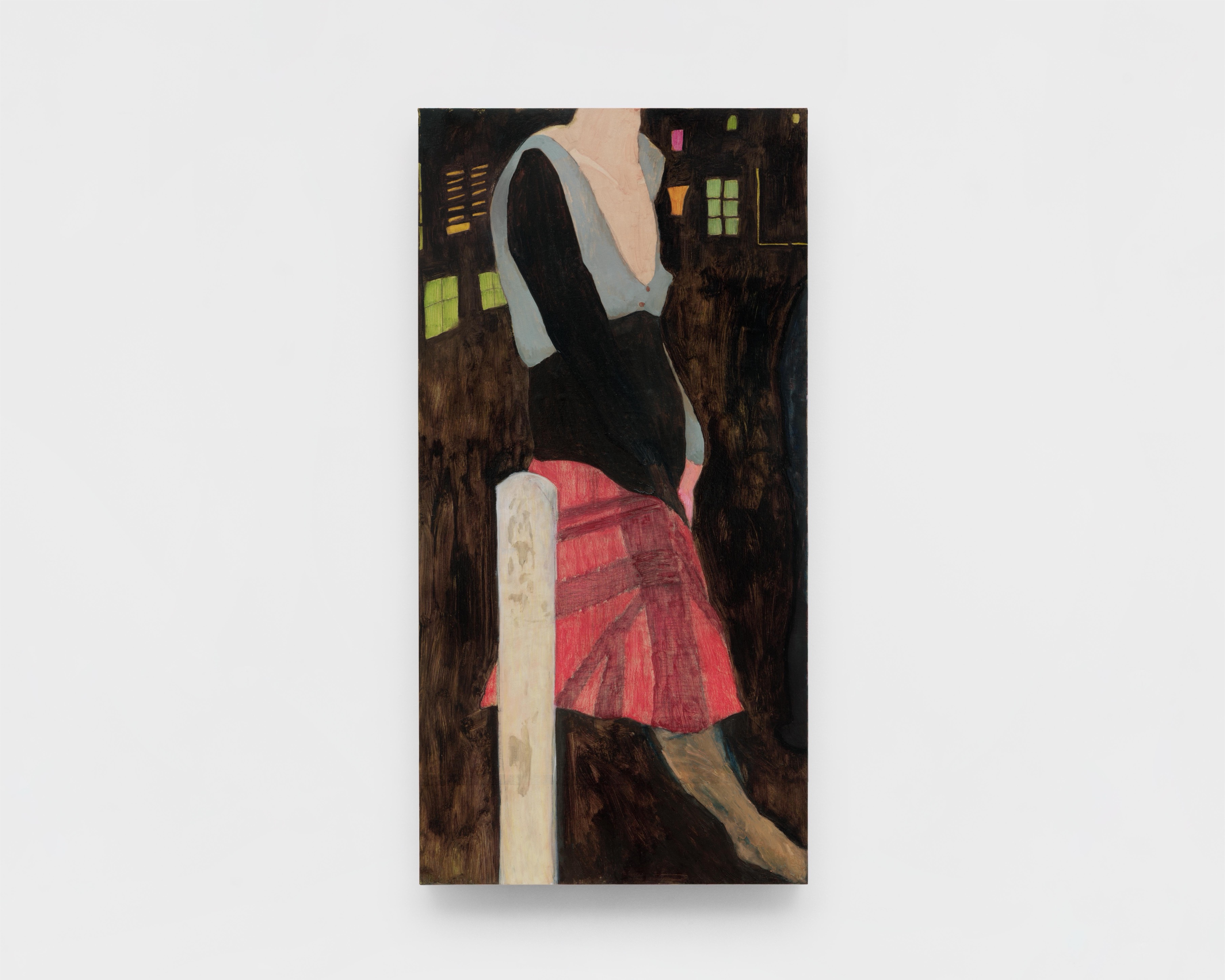
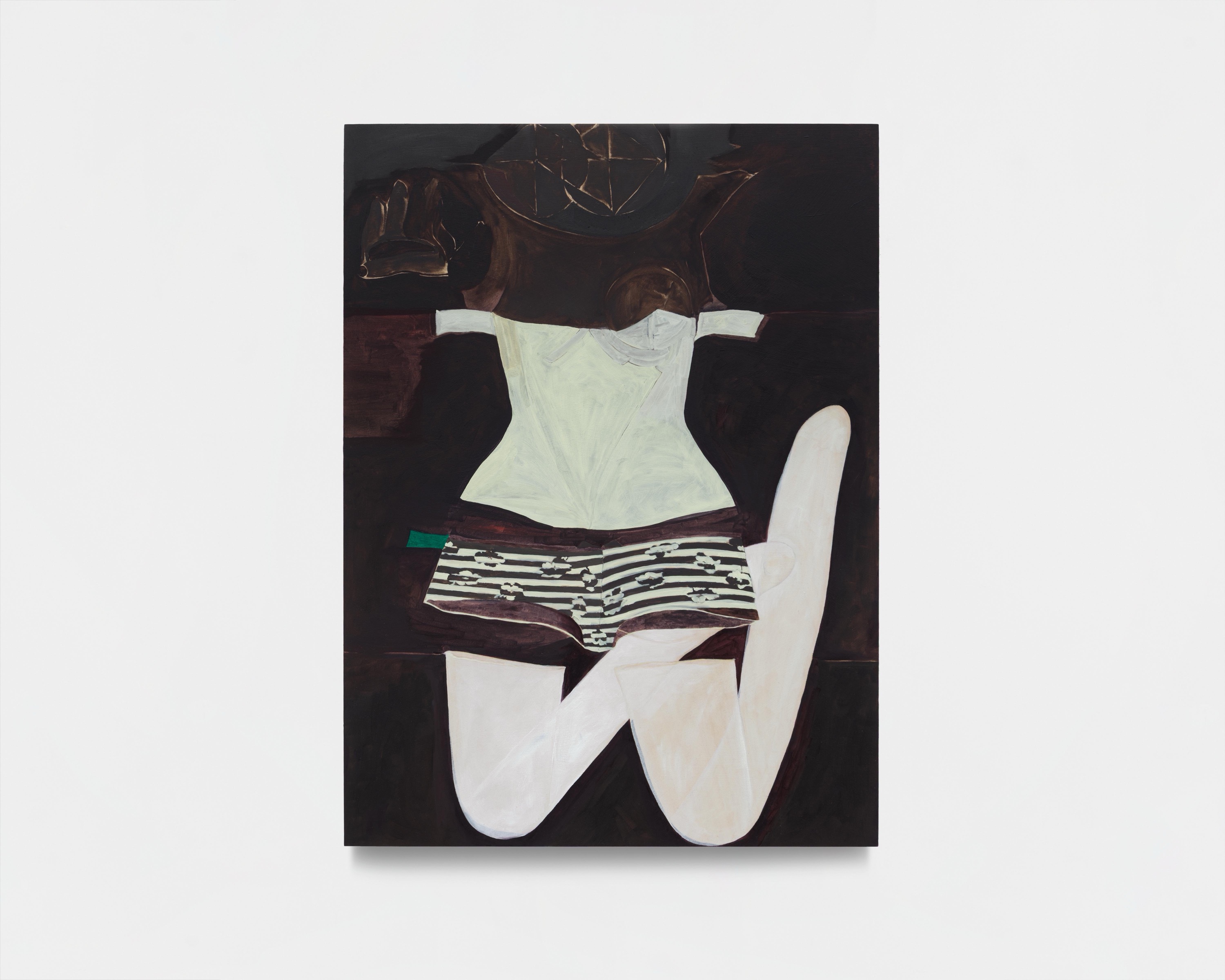
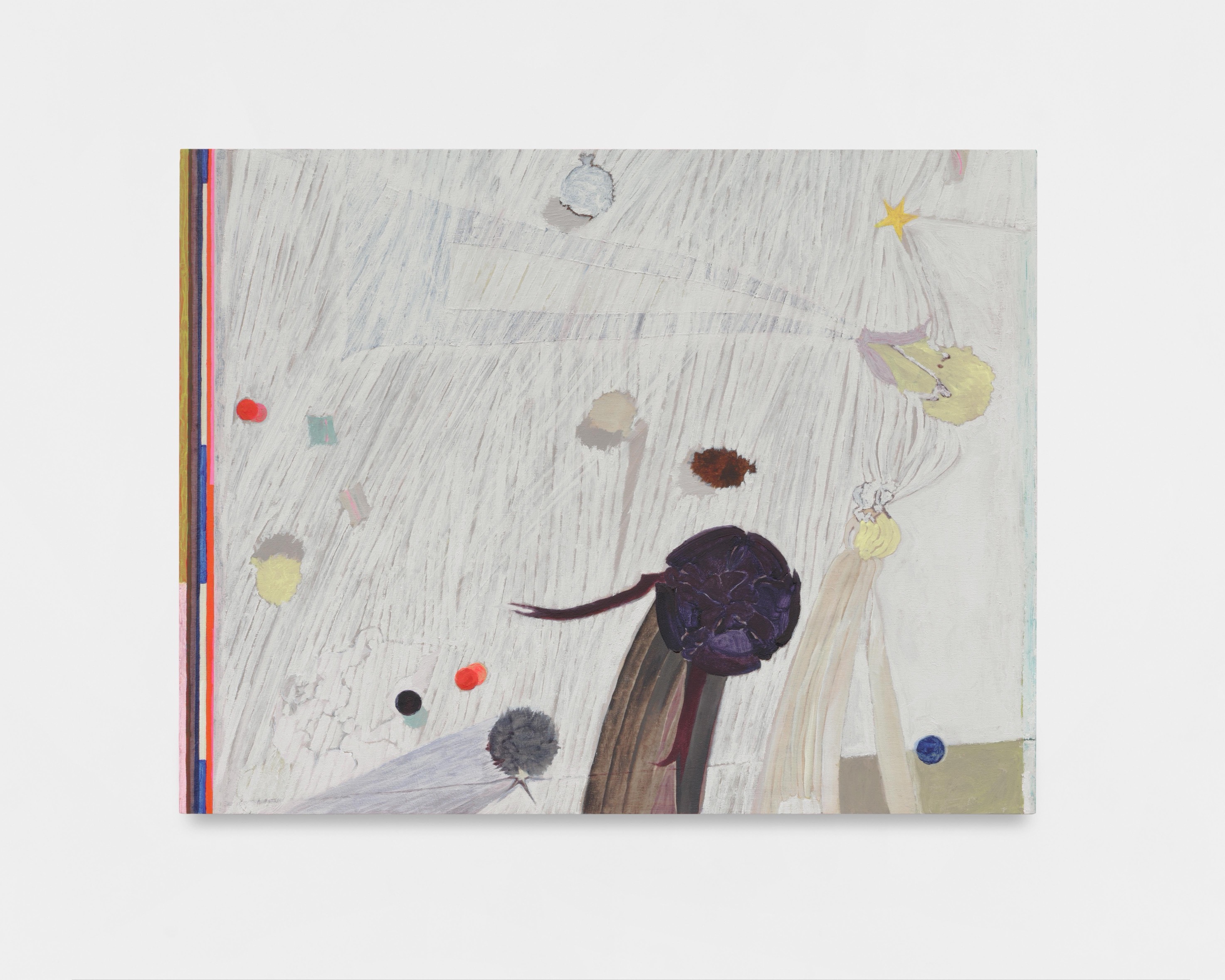
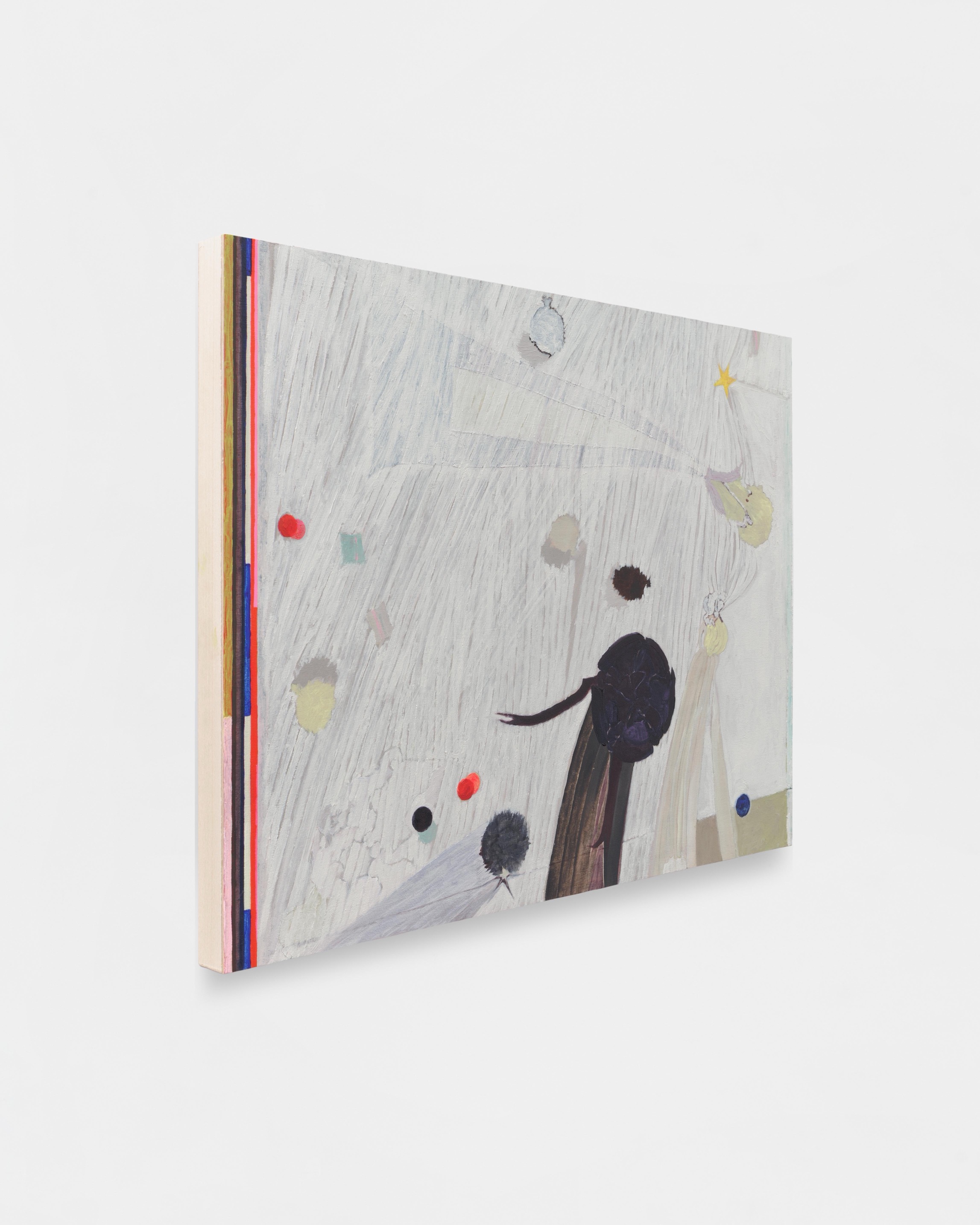
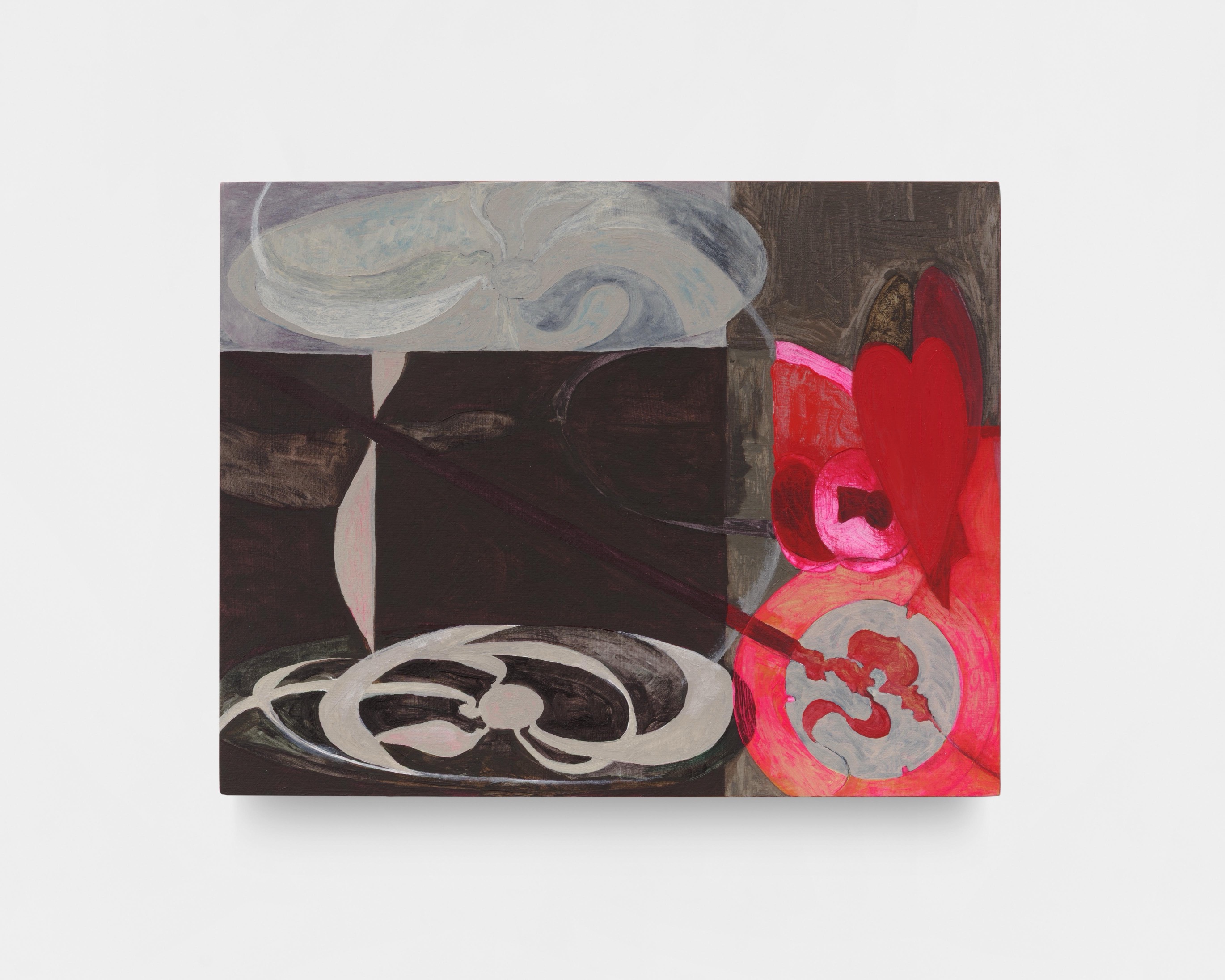
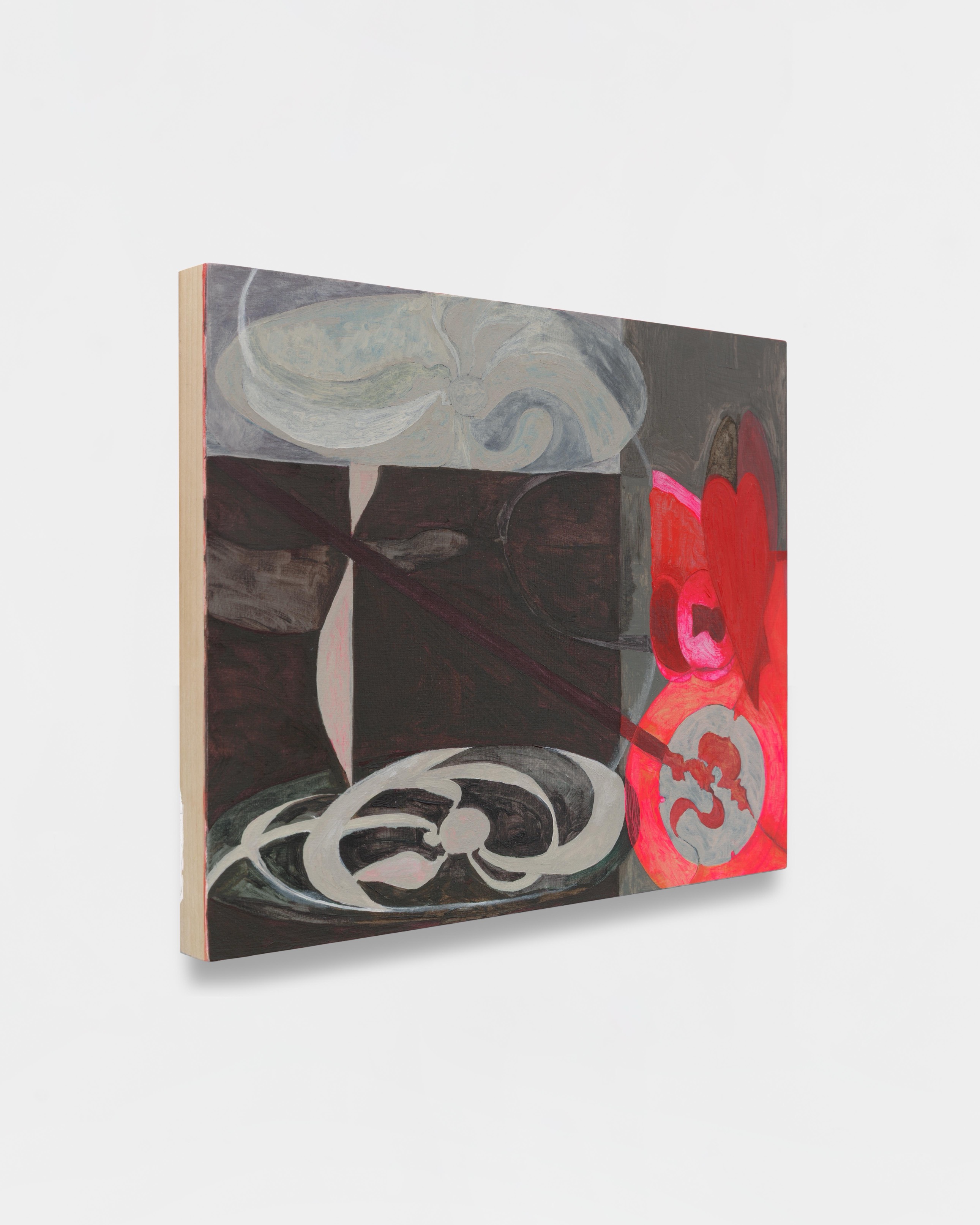
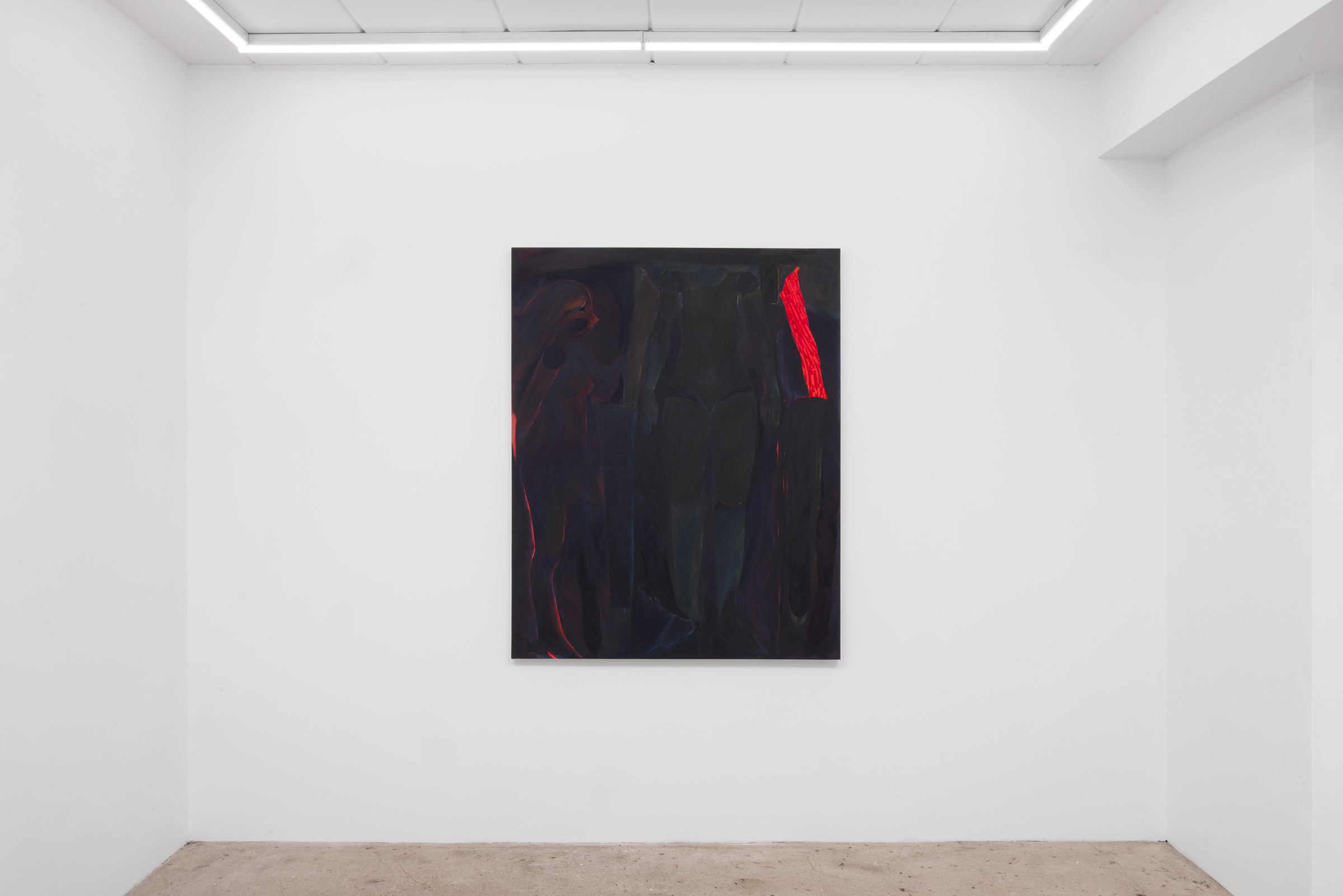
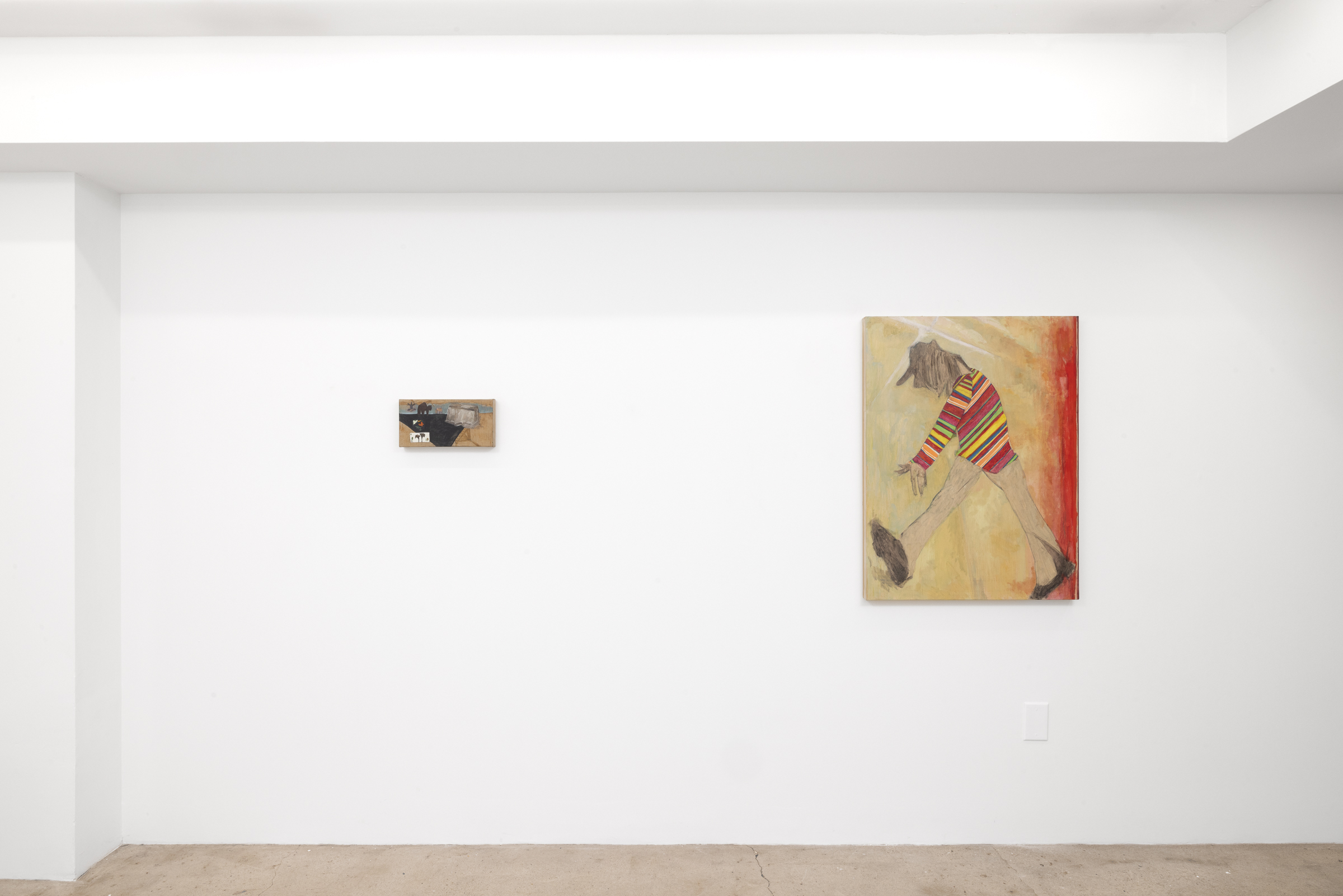
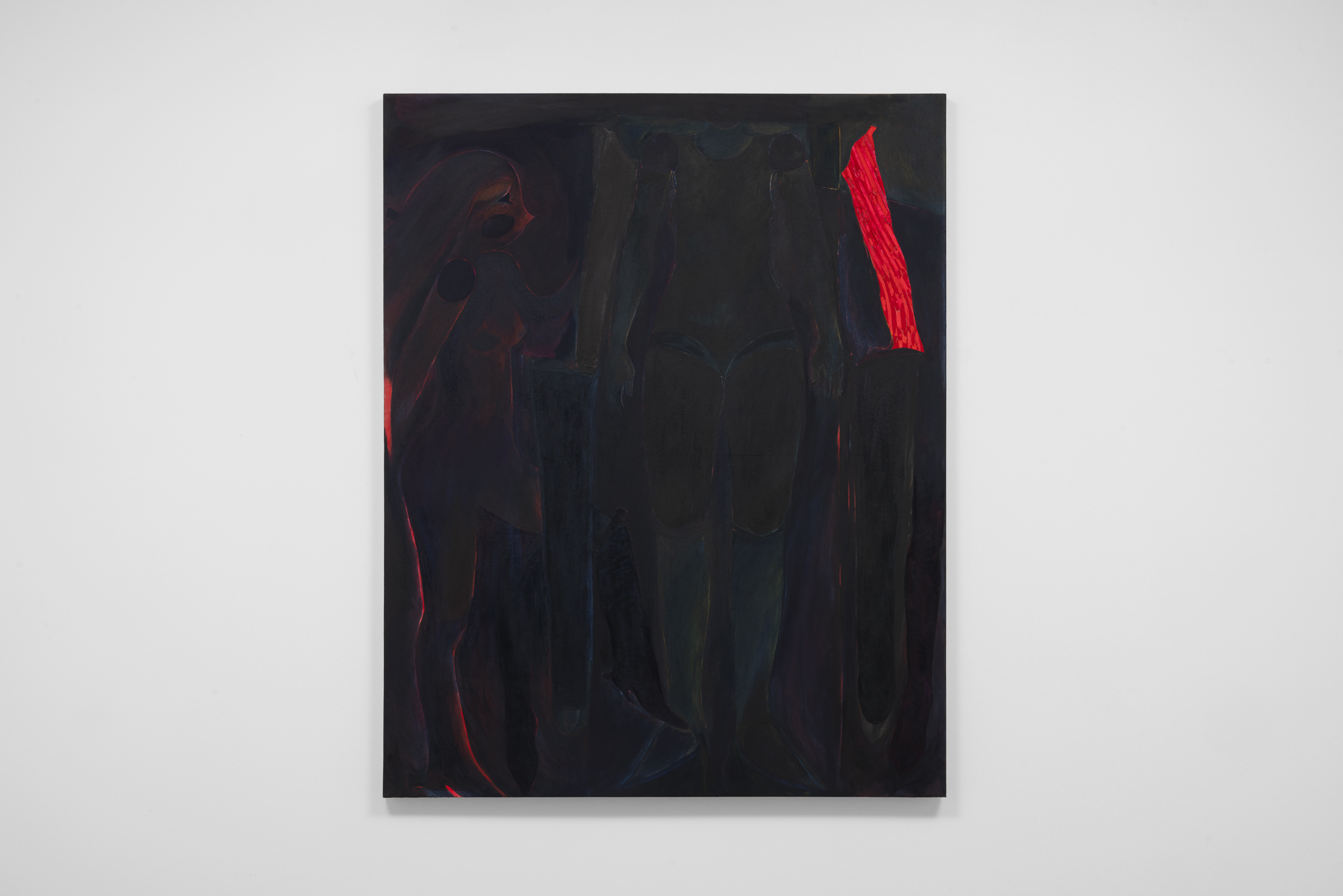
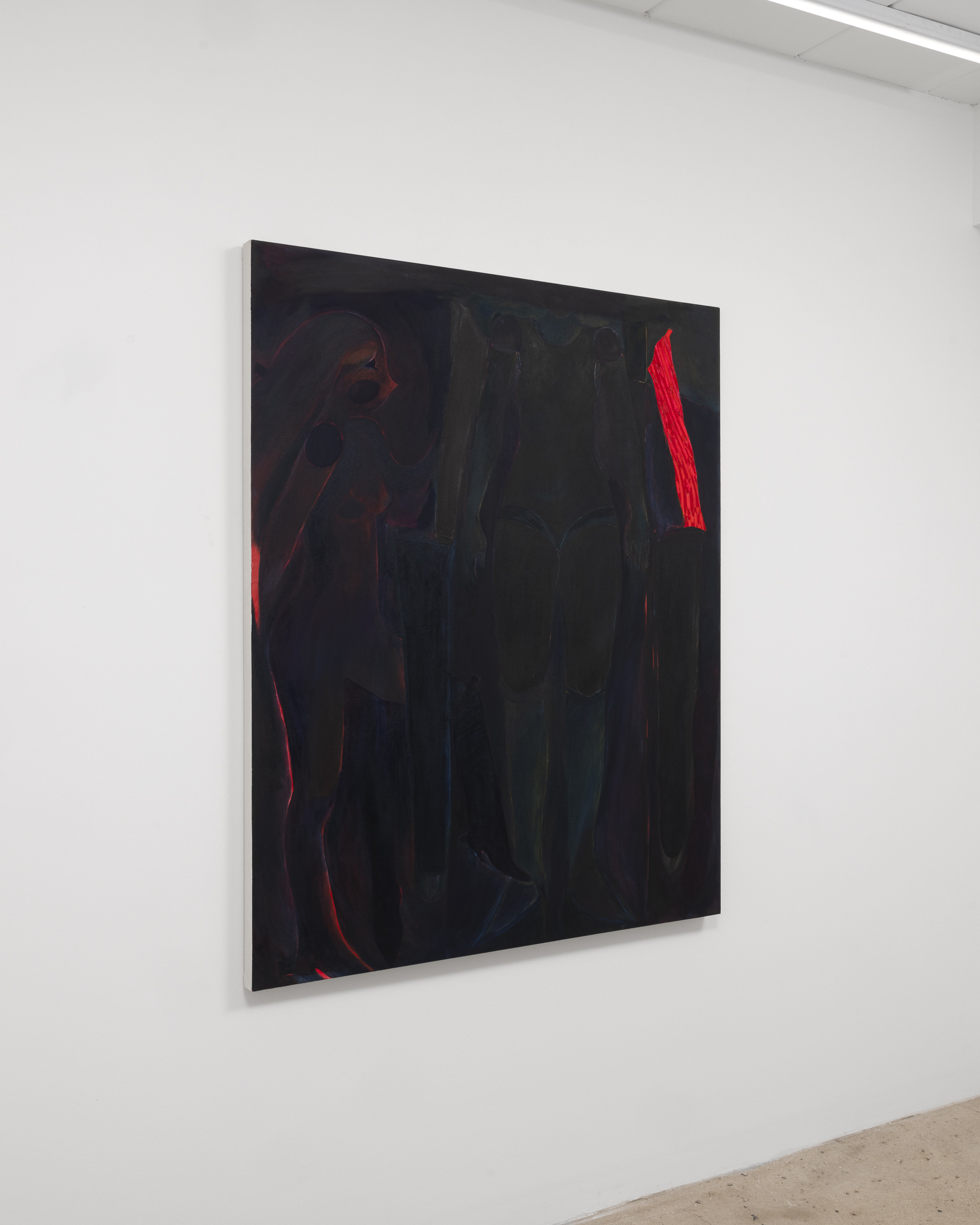
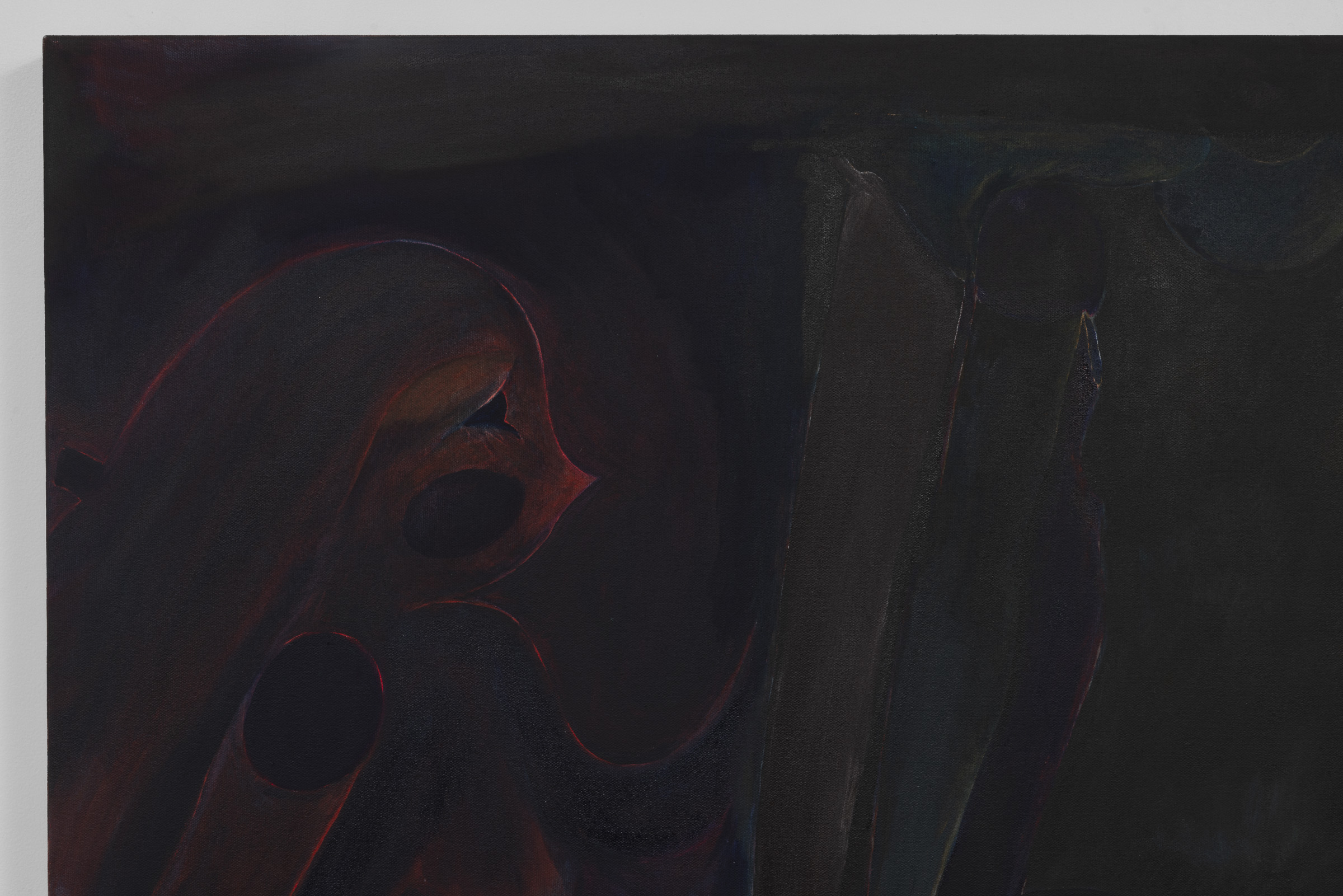
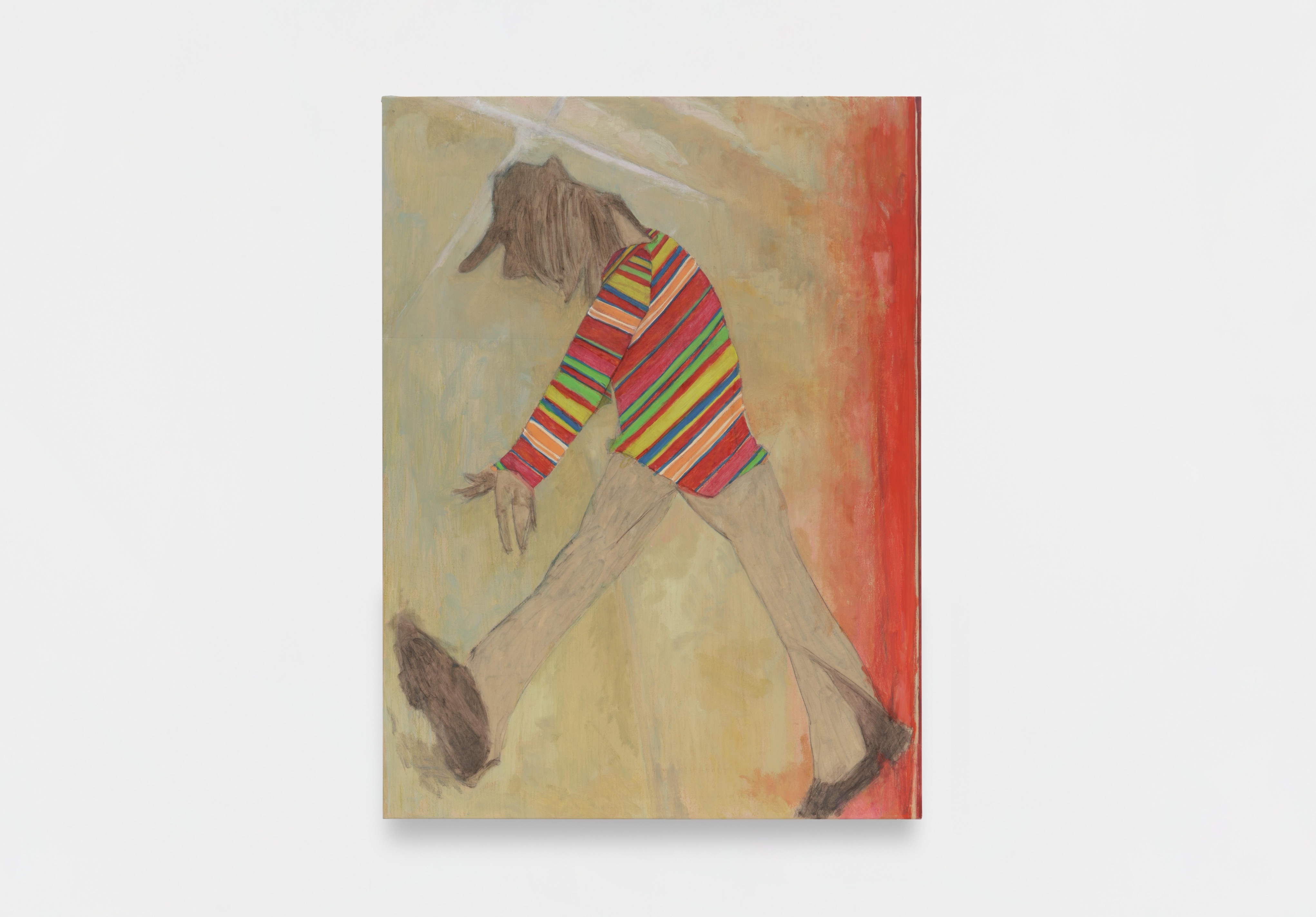
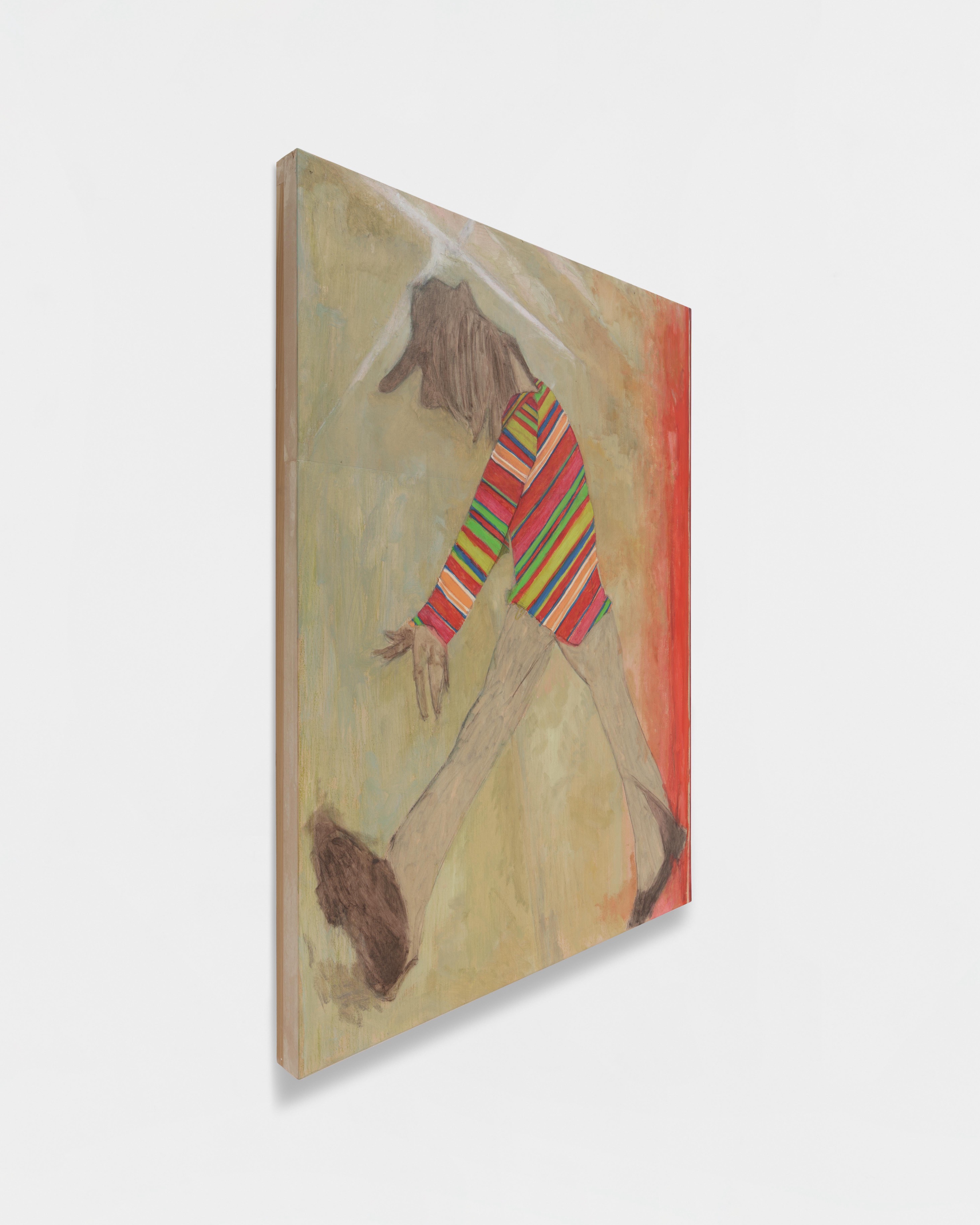
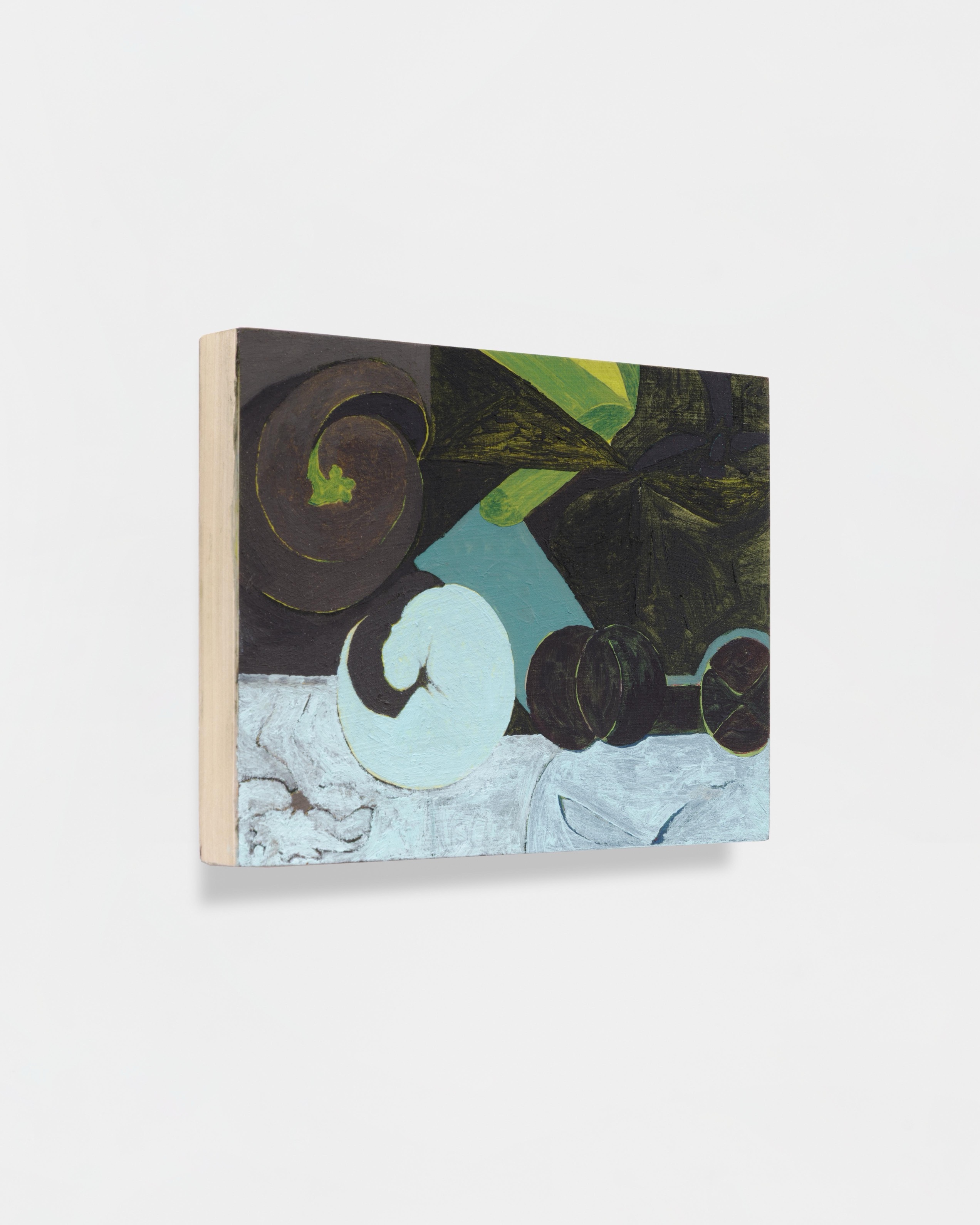
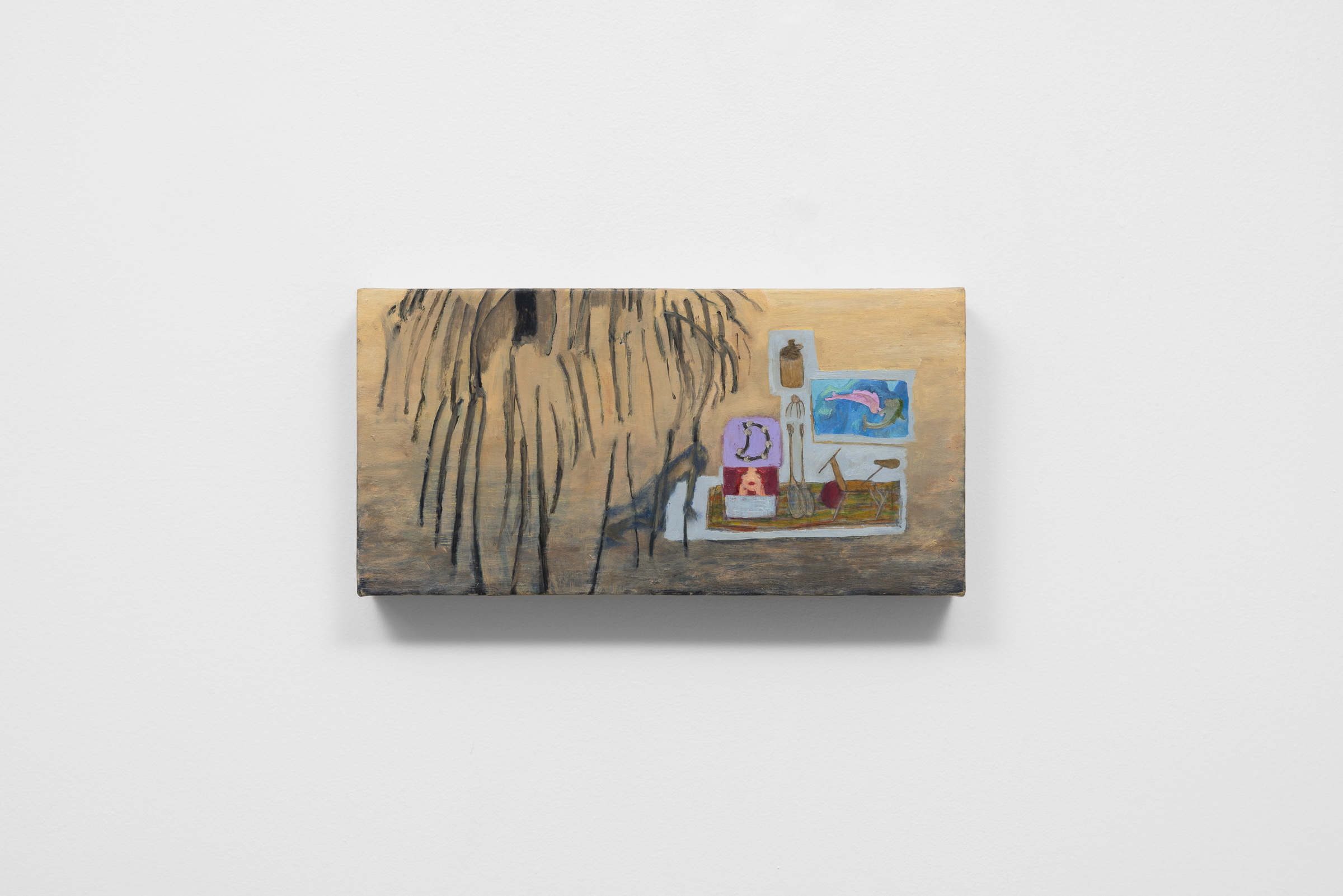
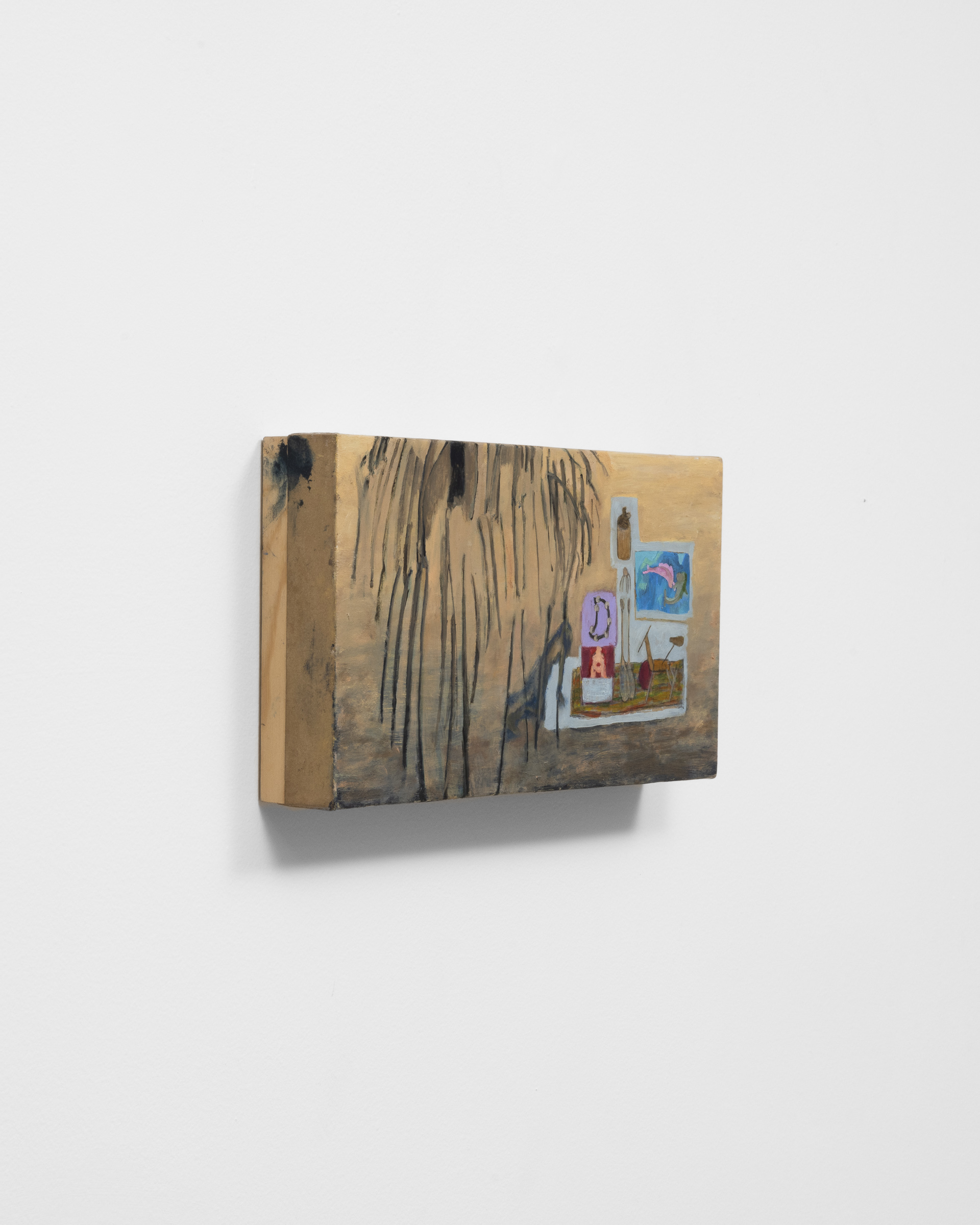
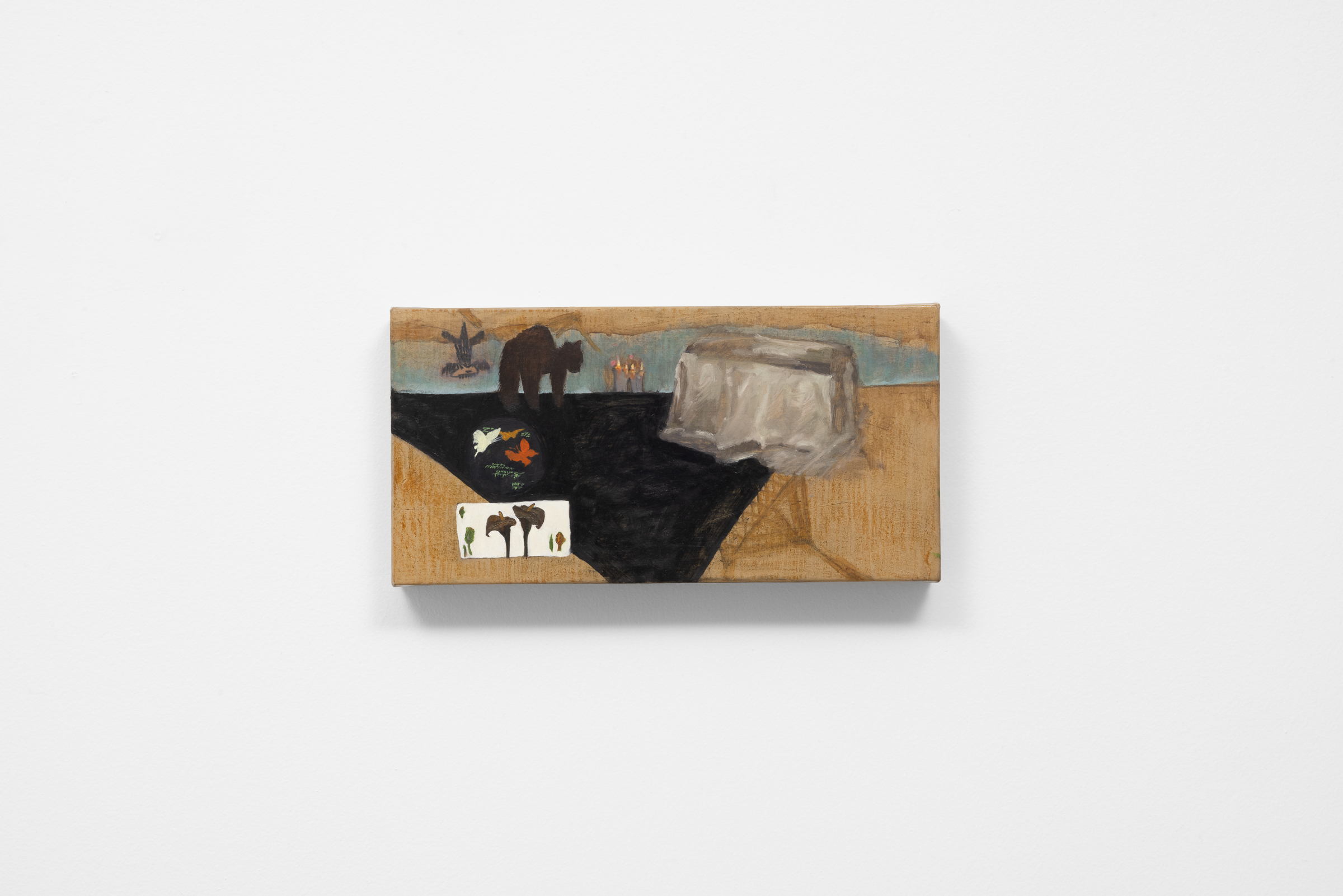
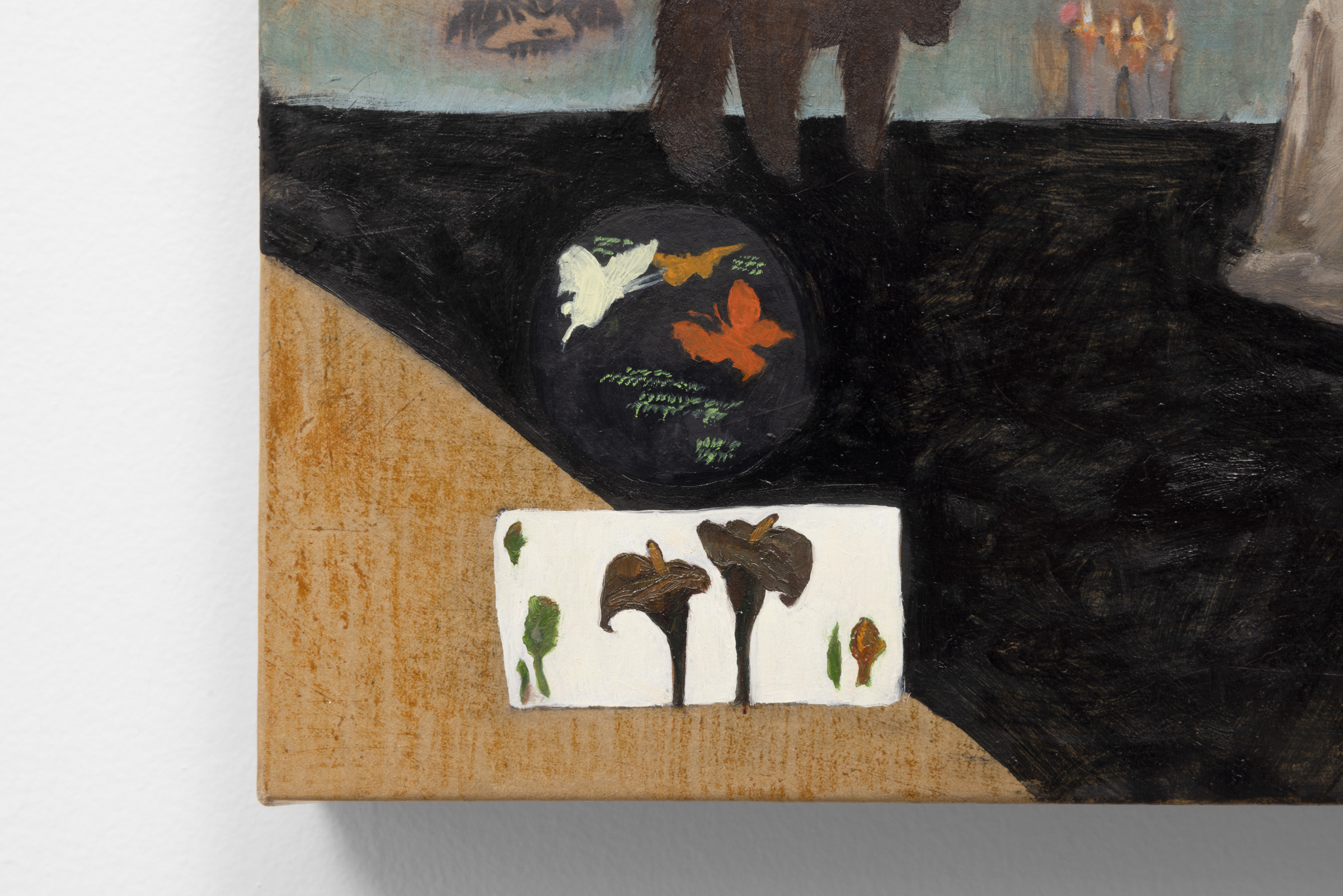
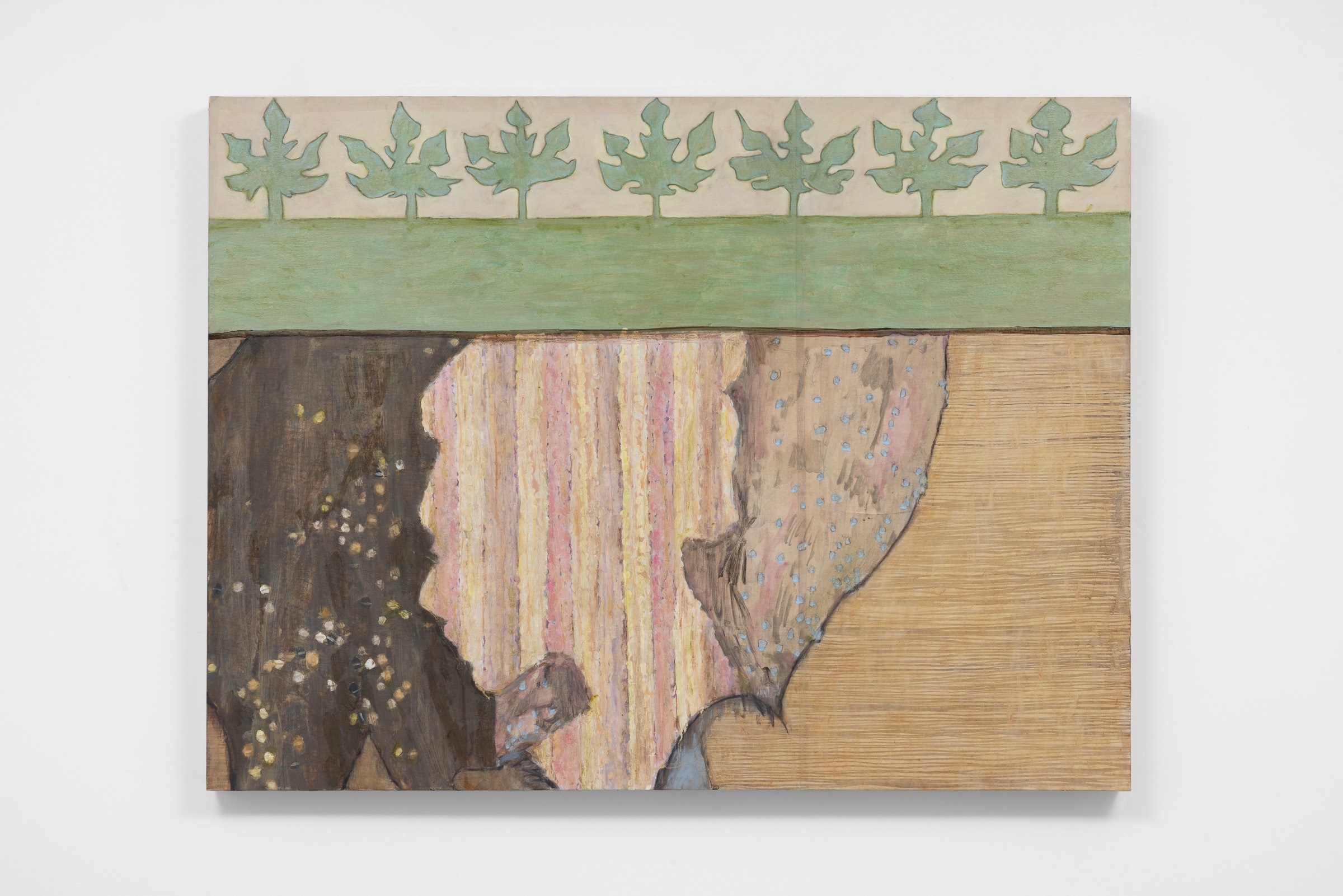
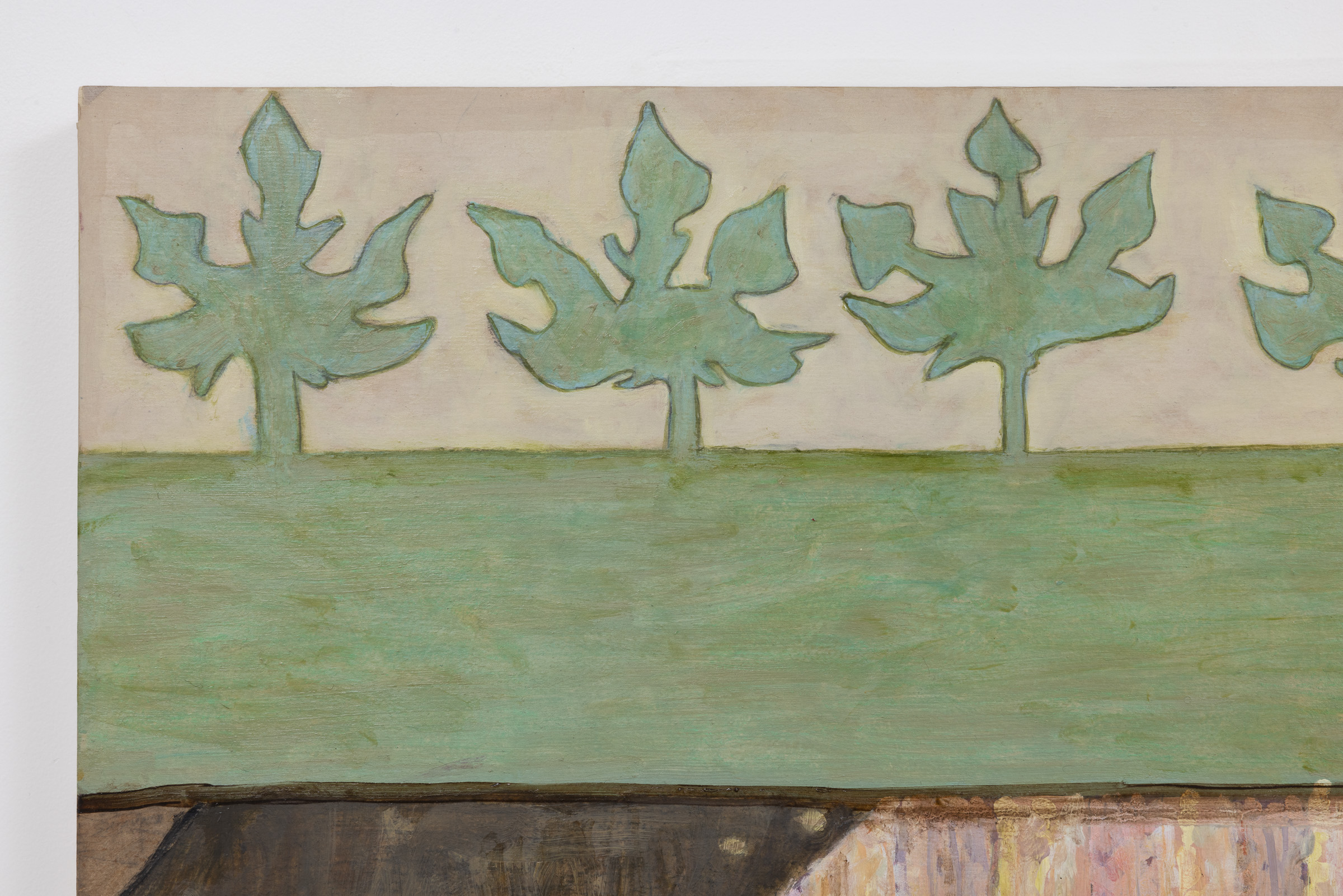
In this exquisite corpse of an exhibition, a sense of game-playing and play-acting emerges as a structure for connection and its obstacles: a process of modeling and mirroring, of finding one’s self in another. Embodiment is a shared concern, enacted through a kind of mercurial cosplay where abstraction is the costume. Miasnikova’s iconographs of female figures obscure their source, giving the viewer a sense of someone familiar while welcoming ambiguity. These anonymous actors parallel Moniz’s mechanomorphic paper dolls, the head cropped by the paintings edge or cogs and pinwheels à la Picabia and Duchamp, and a clipped leg from Calder’s Circus (1931) overlaid with patterns from swatches of deadstock fabric.
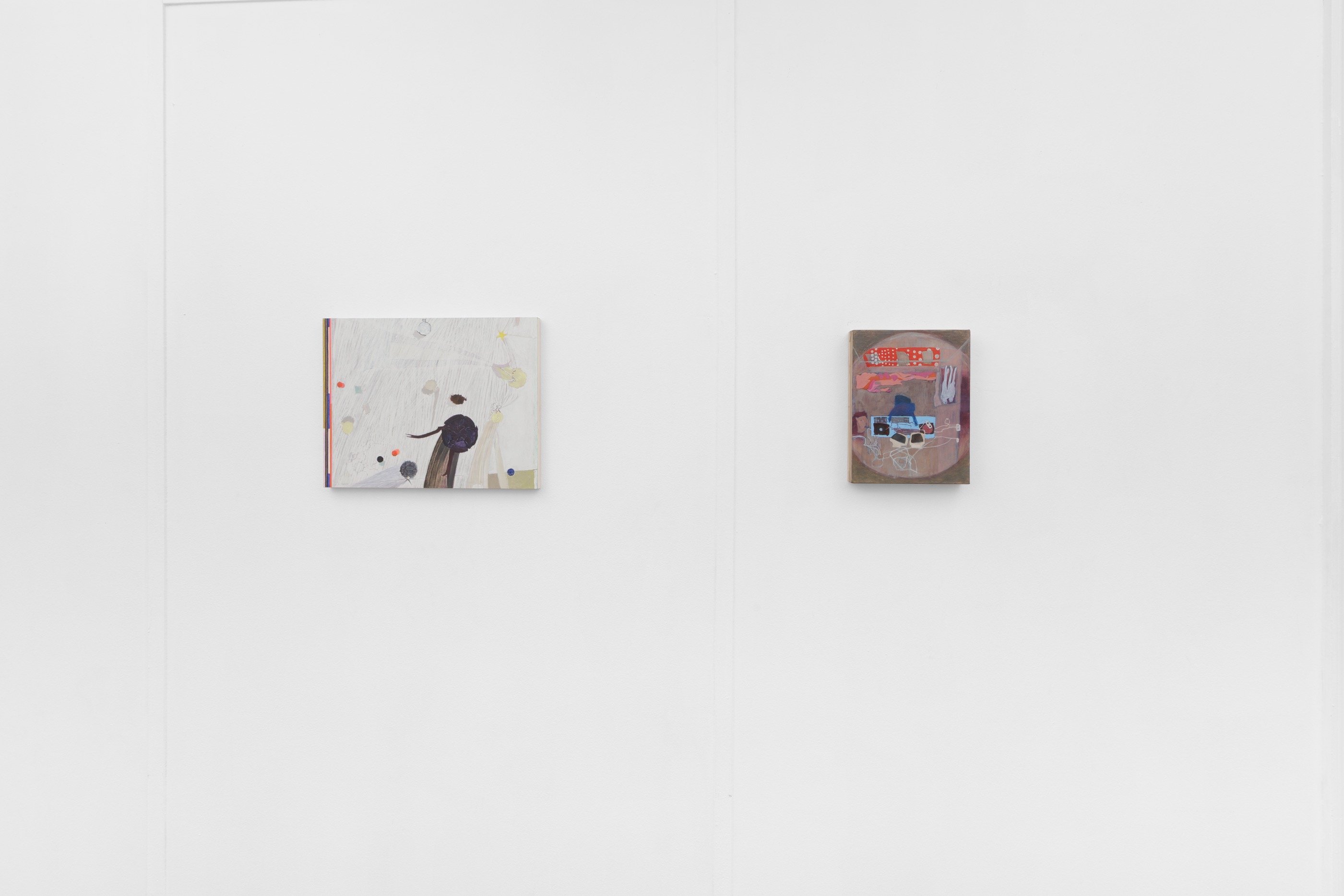
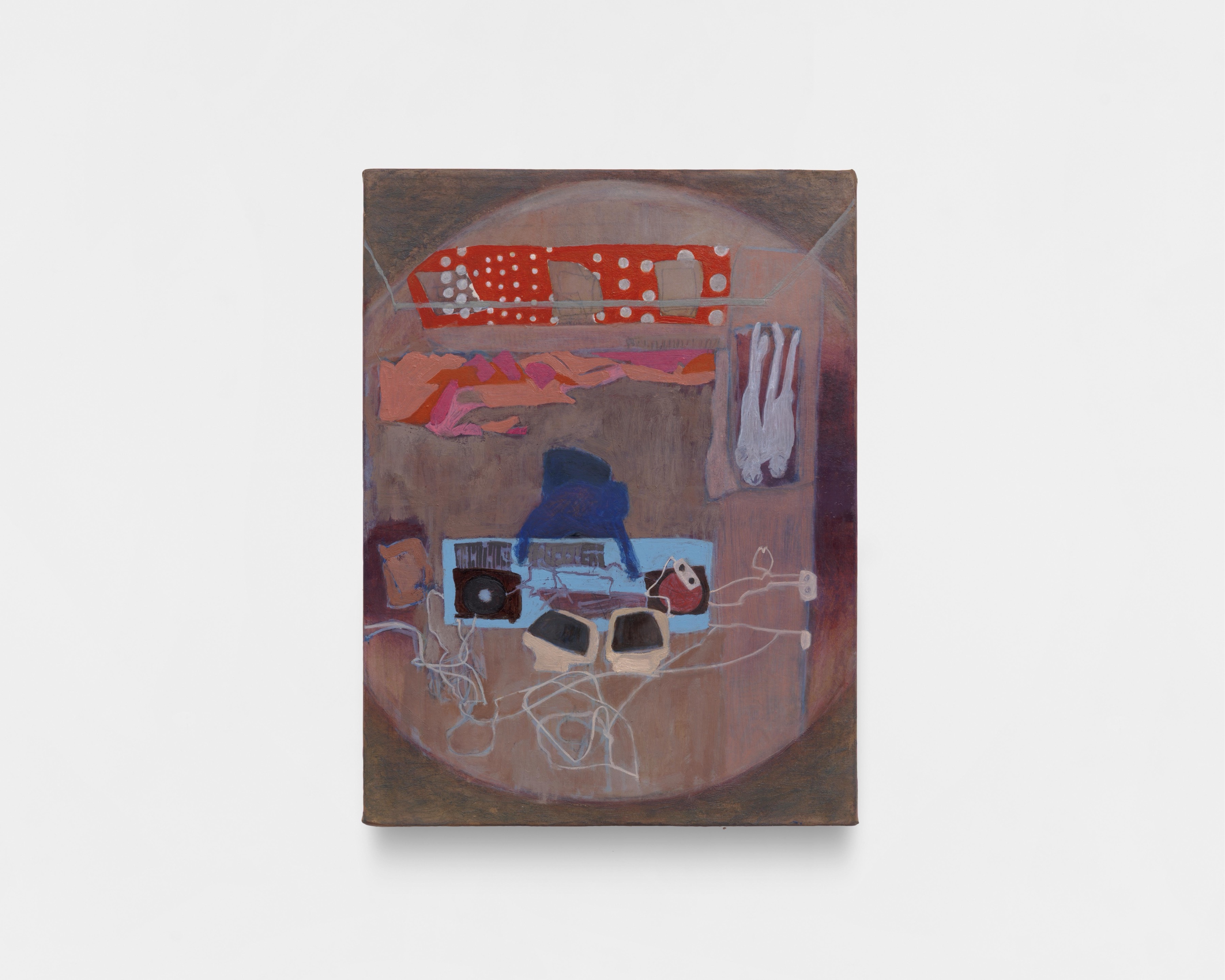
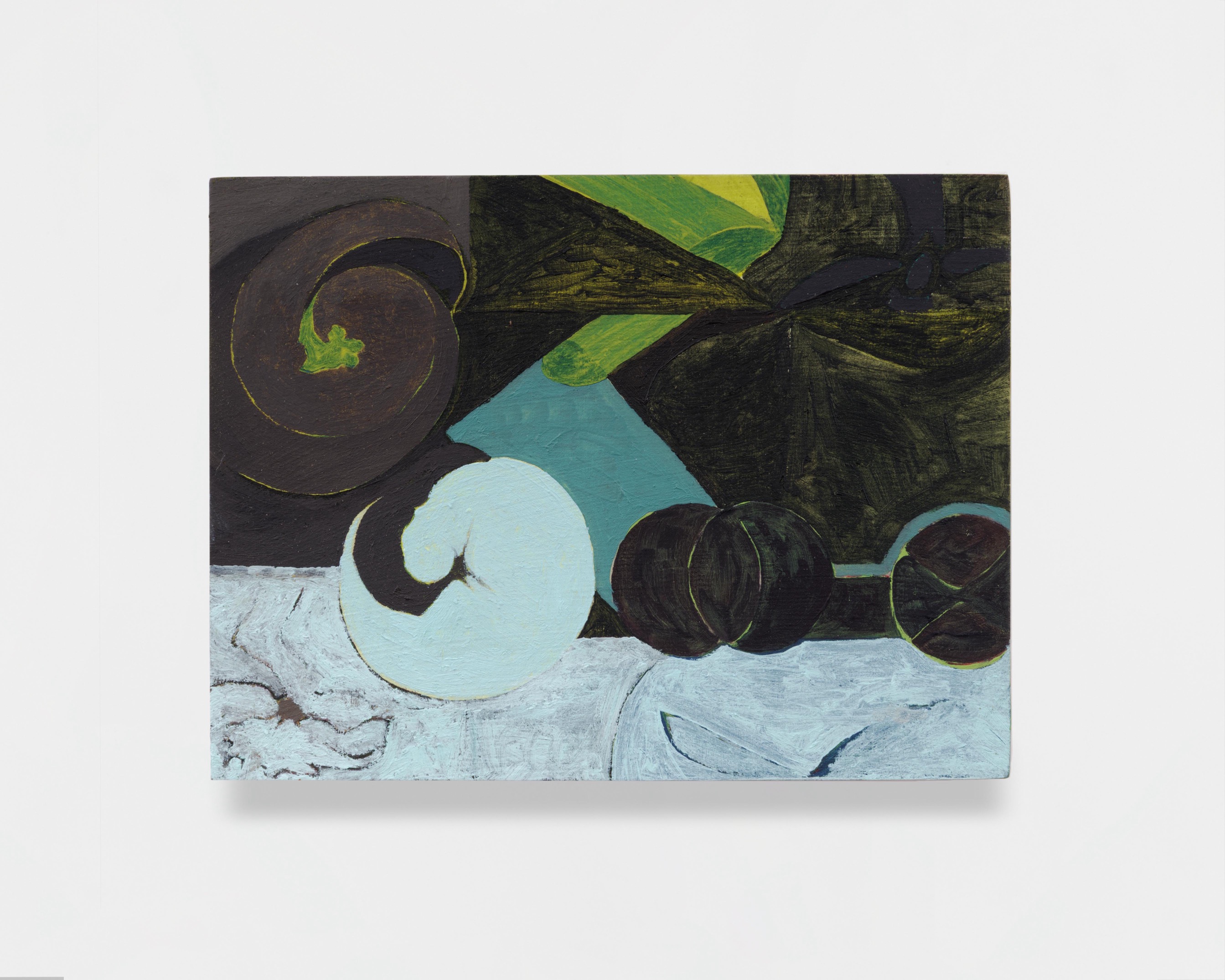
Both artists build personal archives of images, which surface formally in the works. In Moniz’s Ello, she pulls from accessories belonging to a discontinued modular 2000s toy found listed on resell websites. These elements appear as composite cartoons, the memory of play suspended on the surface. Her paintings serve as receptacles for collected objects and imagined vignettes, where they can be stored, remembered, and reconfigured through processes of abstraction. In Miasnikova’s Commuter, the color gradation of a wallet is transformed into a sunset background for a city worker. Her small works display constructed scenarios of individuals interacting with genuine house items. Miasnikova’s everyday motifs––clothing, patterns, pictures, objects––illustrate a sense of self-fashioning that is packaged into off-kilter interior scenes.
Each artist transforms her domain into a malleable surface, a puzzle governed by a surreal, collaged logic. Through this process of sharing collections and practices, the personal becomes externalized.